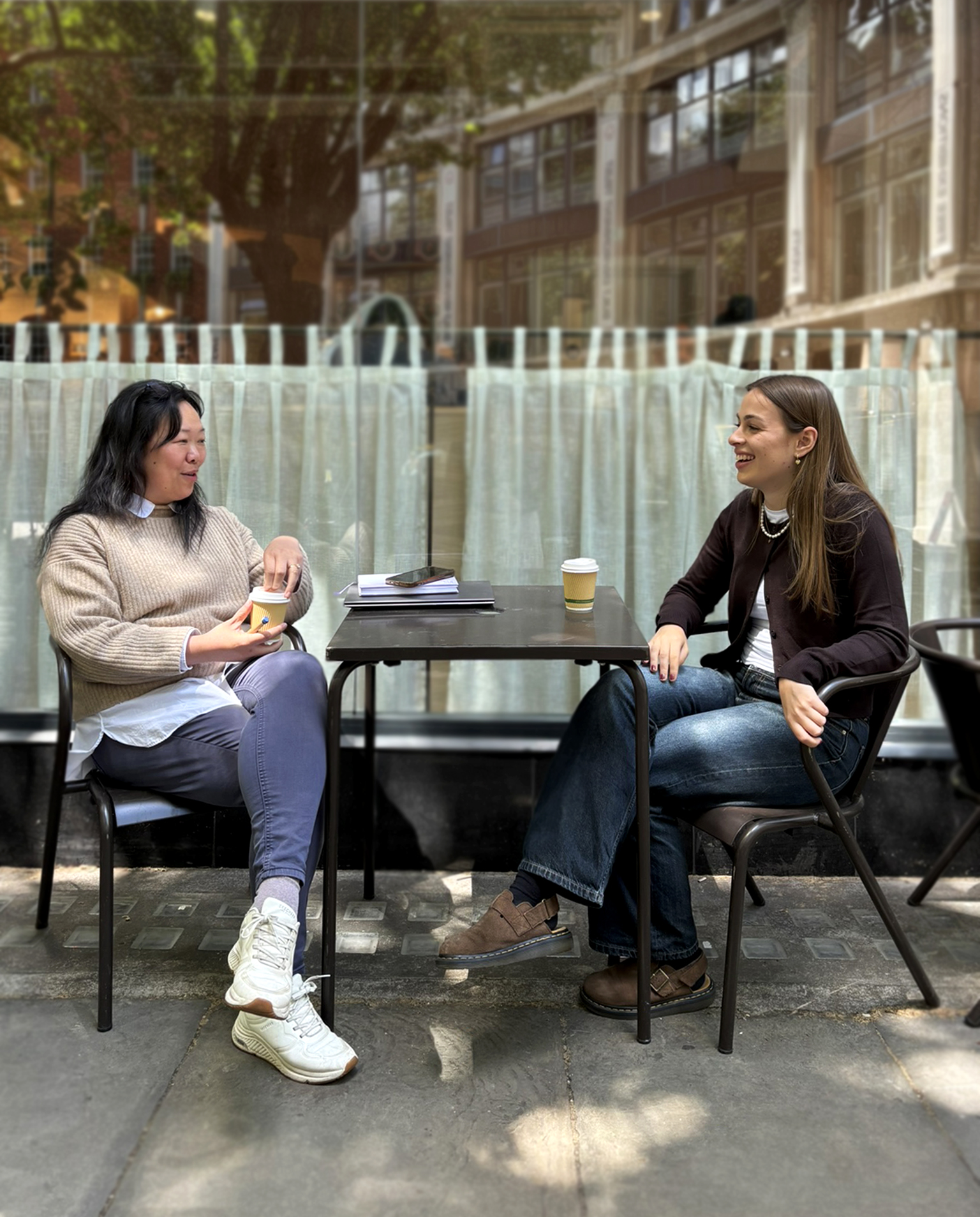
To mark International Women in Engineering Day, Partner Anna Wai and Civil Engineer Katherine Nutt sat down for a conversation about how they found their way into the profession, what it was like being one of only a handful of women on their university courses, and the advice they'd give to engineers just starting out.
Their conversation spans two generations of women in the industry, but the same threads run through both: the value of finding other women to lean on, the work of learning to build confidence and believing in your knowledge.
Anna: How did you get into engineering?
Katherine: Maths and physics were my favourite subjects at school, but I'd never really thought about studying engineering. My mum put the idea in my head initially. It wasn't a big conversation - she just asked if I'd ever thought about it, and I said, oh yeah, good idea and started looking into it further from then on.
I lived in Leeds for four years doing an Integrated Master's. When I was choosing universities, I looked for general engineering courses rather than specifically civil or structural, because I couldn't decide which one to do... I went to a couple of sixth-form uni taster days, some of which were specifically for teenage girls.
And Civil Engineering was my first job straight from uni.
Anna: What was it like being a woman on the course?
Katherine: I'm pretty sure there were only 12 girls on the course, out of maybe 100 - it was quite a big year group. As the years went on, fewer of us continued on to the master's, while others split off into architecture or other courses.
My mum studied electrical engineering, and two of her closest friends to this day are the coursemates who were the only other women on her course. Between the three of them, they were the only women doing engineering at all - not just in one discipline - across the whole of Bristol University at the time, and they're still close friends now. I think I've found something similar: the friendships I have with other women on my course feel like a special bond, and the same goes for meeting women at Price & Myers who started their careers around the same time as me.
Anna: It was similar for us - about 116 in the cohort, across 4th and 5th years, and probably single digits of girls.
Katherine: I did a module called Constructionarium, where there was a group of 18 of us on a project, and I was the only woman. When we got there, it was actually fine - I had a really good time and learnt loads. But in the weeks leading up to it, I was so nervous about going away for a week with all these boys, not really knowing what to expect. It was more the anxiety beforehand than anything - in reality, it was completely fine.
Katherine: What was your first experience on site like?
Anna: I liked my time on site when I was really young. It was funny - people were overly polite to me. I remember them swearing, then suddenly realising I was there and going, oh, excuse my French. I thought that was quite sweet, them holding their blushes, when really my language was probably worse than theirs.
I remember going to site with one of the engineers, many years ago, and saying, Look around you - there's probably about 300 people on this site right now, and they're all working off the drawings you issued last week. How does that feel? It's quite an incredible thing.
Katherine: My very first time on site wasn't especially exciting - I took the Elizabeth line to Abbey Wood to measure some trial pits on a long, thin site. It was chucking it down with rain, and I just needed to measure the trial pit depth, but I couldn't open the gate because it was rusted shut. I remember thinking, oh gosh, this is a bit embarrassing, so I had to go all the way round and ask the builder sitting in his van, I'm really sorry, I'm struggling to open the gate, would you mind helping me? - which can be hard to do, asking for help like that. He was very nice and helped me, and he struggled with it a bit too, which made me feel better about myself.
Anna: What do you love most about the job?
Katherine: I think what I like about engineering is that you see it every day, just walking down the street - that's why I find the Price & Myers job map so interesting. I can get lost in there looking at all the jobs we've done. What we're doing is so real and all around us - even across the road there's a construction site. It makes you feel like you're making an important impact. Even if the drainage is below ground and you can't see it, it's still there and it's important.
Anna: It's working, isn't it? Nobody really cares about engineering when it works, but when it doesn't, everybody wants to know. If someone asked me my favourite part of a project, I'd say the start - conceptual design, sitting round the table with architects and clients, working out how it could be. My next favourite part is actually being on site, where all the challenges come up and you're solving them and working out details on the fly.
Katherine: I also love looking into the history of a site - this one's built over one of London's lost rivers, and I could really get lost researching all the historical information about that. I find that part of the job really interesting.
Anna: What advice would you give a younger engineer starting out?
Katherine: Sometimes I have to remind myself when I actually know something. I'm sure lots of people do this, but I find myself saying I think or maybe - and I have to remind myself, no, I do know this, so say it with confidence. I don't know if that's a particular characteristic of being a young woman, maybe.
Anna: I did it too at the start of my career. Not waffly exactly, but I'd send slightly longer emails explaining things, saying I believe or I think, when actually I knew it was fact - this is the policy, this is what we're doing, and here's why. That comes with time, but it's definitely something that happens when you're a young engineer and everyone else in the room probably has another ten years' experience on you.
That's one thing I'd tell all young engineers - not just women, but everyone - there's no such thing as being given an opportunity you're not ready for. If you're given it, it's generally because someone believes you can do it, or that you'll grow into being able to do it.
Katherine: Confidence is key. Sometimes it's not that you lack the knowledge or the skills - it's that you lack the confidence to show that I have them. So that would be my advice: confidence is key.
Katherine: How has your day-to-day work changed in terms of working with civils?
Anna: I think that's probably the nicest part of my progression - I used to work very much in silos, and now, without a shadow of a doubt, working with the civils team takes up quite a lot of my working day, which I really like. Working with you guys, you know things I don't, so I feel like I'm always learning something.
It's especially good on the big campus jobs, because that's where it gets interesting for you too, and on our big data centre projects as well, where it's all a bit of black magic to me. Compared to when I first joined, the structures and civils teams are much better bonded now, because at the end of the day, we wouldn't be able to do our jobs without you guys on board. So it's quite a nice balance - we might outnumber you considerably, but in terms of importance on our jobs, you're most definitely right up there.
Katherine: Would you choose engineering again, if you had the choice?
Anna: It's funny, I was thinking about this recently, because my daughter's about to choose her GCSEs, and I'm trying not to push her too hard one way or the other. It's quite exciting thinking, gosh, if I had the chance to do it all again, would I choose engineering? And I personally would - I think it's a really nice career.

