Recently, while working on a project at St Dunstan’s School in South London, I was reminded of how far some aspects of civil engineering have come. The project was fairly modest in size and involved the redevelopment and reimagination of a dull outdoor play area into an inspiring new space for students, brought to life by landscape architect, Guillaume Baltz. Much to my satisfaction, a key feature of the design was its considered approach to surface water run-off from the play area and the roofs of several small structures.
Before going into the detail of what we did, I’ll say what would almost certainly have happened 10 – 15 years ago. Back then, water - and particularly surface water run-off - was treated as a nuisance to be collected, hidden away and dumped somewhere offsite. Drainage networks were very much the ugly duckling of the design family, with rigid pipes buried well into the ground, away from the main superstructure and architectural works.
Things began to change when flooding became increasingly impossible to ignore as a major element of the climate emergency and was being exacerbated by development. Even then, sustainable drainage systems (SuDS) meant new plastic tanks in the ground, which controlled water effectively, but still kept it hidden away in what I would consider a rather disrespectful manner.
Today, things have changed for the better, and it’s easy to see this progress. Water is now treated as a valued element of development to be celebrated, enhanced and enjoyed. Collecting it in surface-level ponds and swales supports biodiversity and creates calm areas for people to sit and think. Raingardens are popping up, providing sanctuary for wildlife, pollen for bees and welcome splashes of green in hard landscaped urban areas.
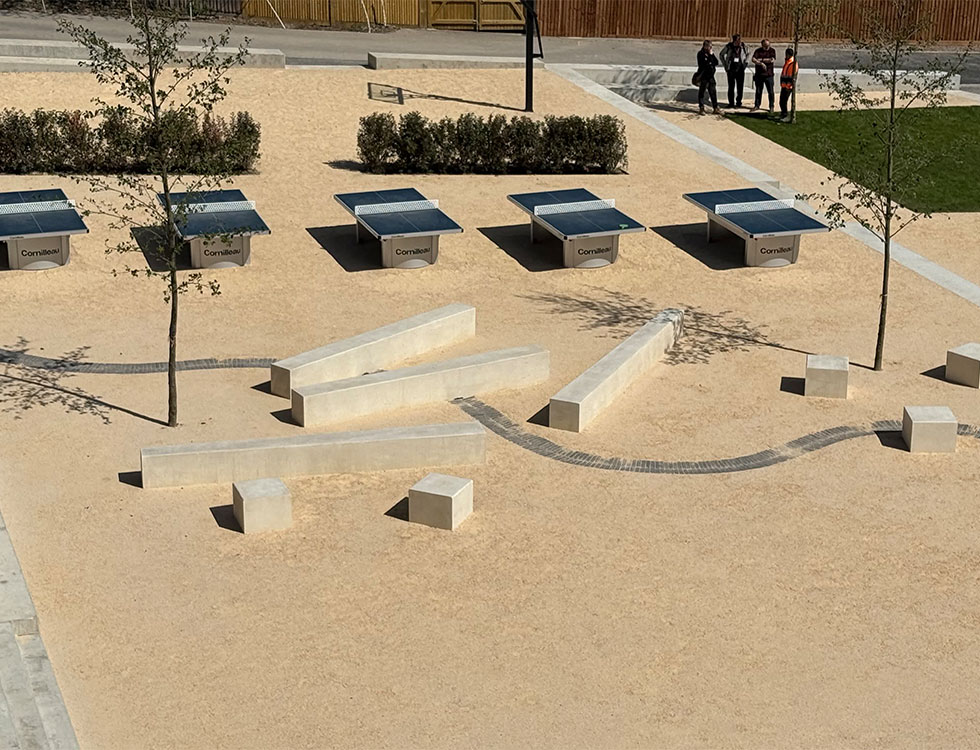
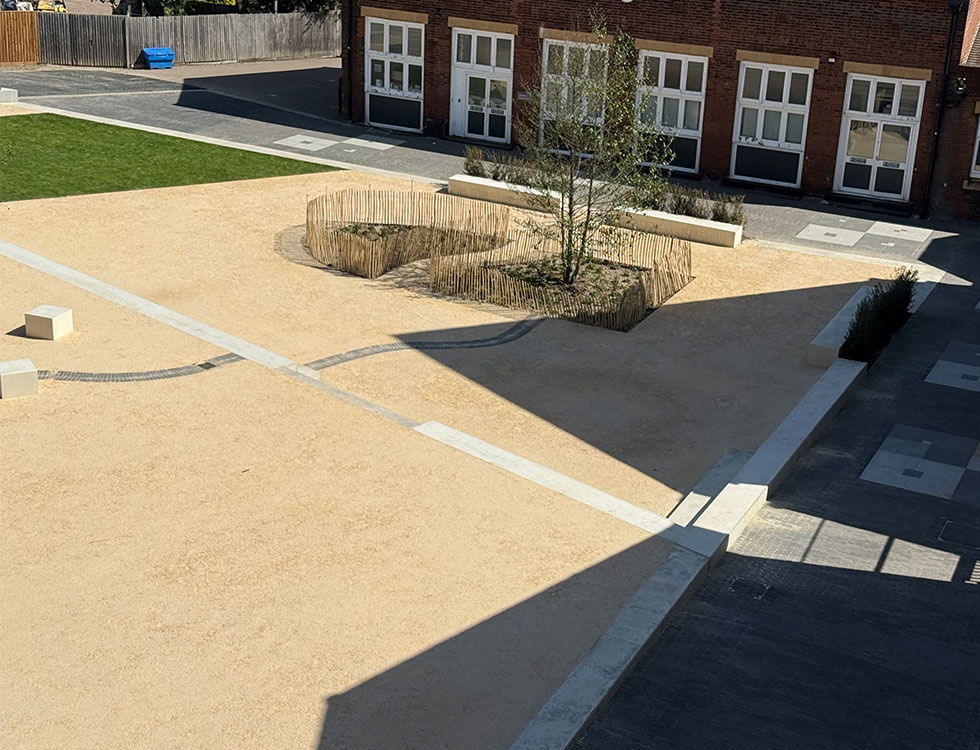
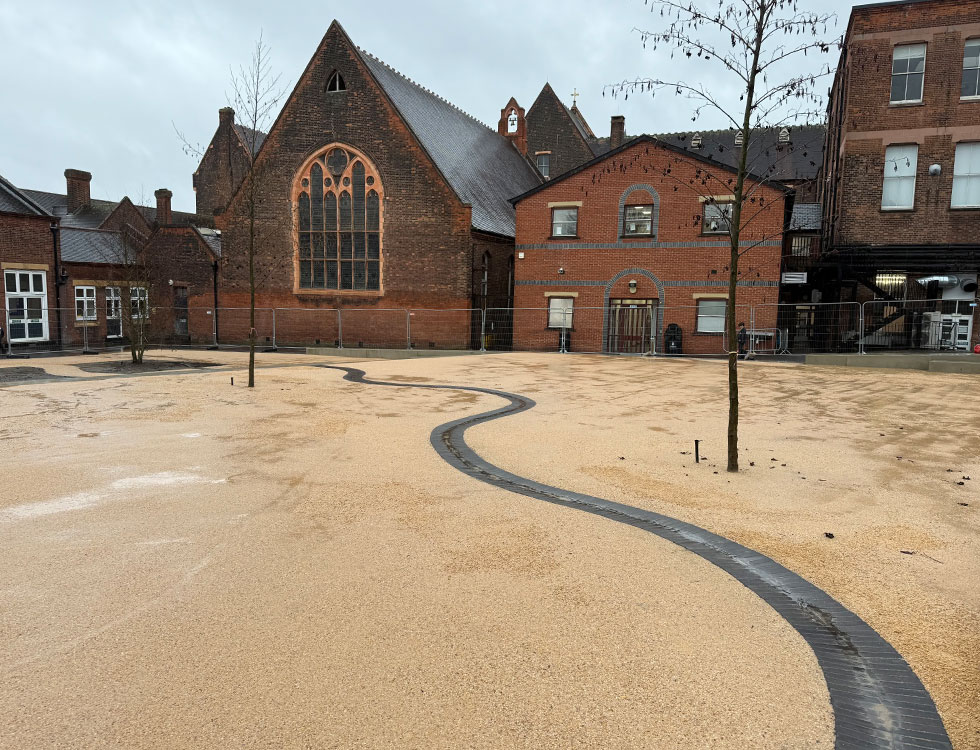
Back, then, to St Dunstan’s School. The new play area is terraced across three levels to accommodate the sloping topography. We embraced this in the SuDS design by running a shallow rill from the top of the play area to the bottom, following the changing levels. At the top, the rill captures run-off from a green roof before snaking through the play area and cascading through the terrace walls until it reaches a raingarden at the bottom, nurturing a newly planted Alder tree. I imagined it as the school’s own stream, a feature that encourages students to stop, look and play with the water.
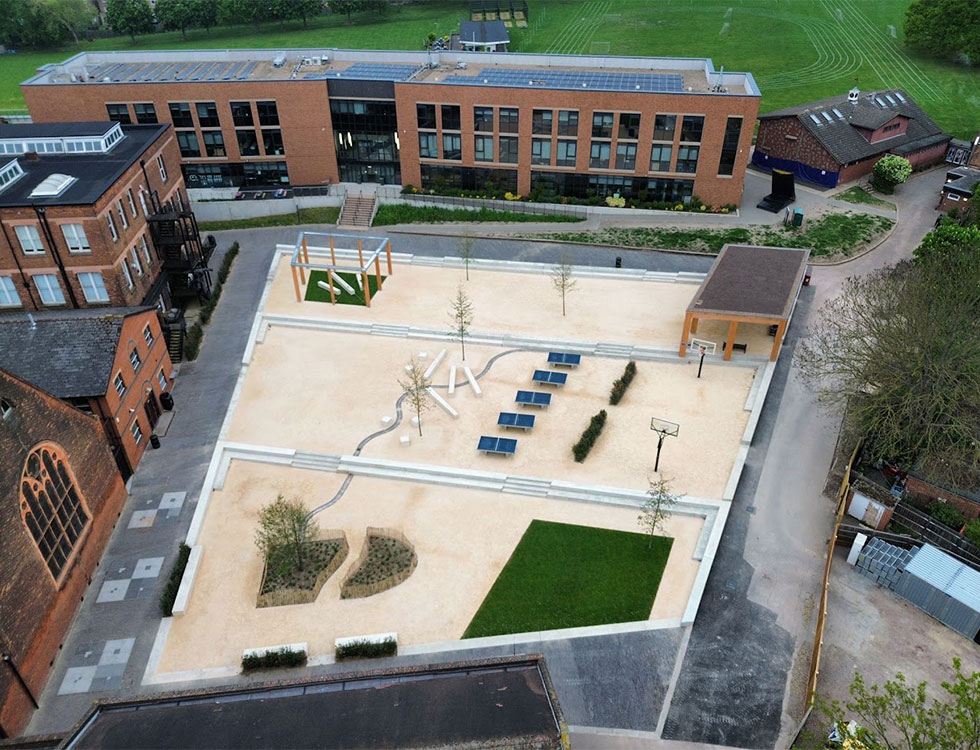
This kind of passive learning shows students what happens when it rains, why water should be allowed to flow, and what can happen when it doesn’t. The heatwaves this summer demonstrated how a lack of rain can leave green roofs looking decidedly less green. On the other hand, the promised storms of El Niño this winter may well show the opposite. Should the rills become overwhelmed, it will cause a temporary exceedance event within the play area. Valuable lessons, in both cases.
This might all seem a bit idealistic, but water is an increasingly scarce resource. Making clear the different ways it can be used in our external spaces is valuable, allowing us to delight in water while also understanding how it moves around a site, into and out of use. Putting this at the centre of an educational environment, or any public space, promotes respect and enjoyment through visibility. I was sucked into the experience myself when I visited the site on a rainy afternoon and, like a giddy child, followed the winding, snake-like flow as it pottered through the rill from top to bottom. I recently shared a video of this at a lunchtime CPD session and was pleased to see it bring amused smiles to the faces of the hungry engineers in attendance.
I hope the pupils of St Dunstan’s School will share this interest in water when out and about in their wonderful new space. And perhaps that intrigue and understanding will stay with them as they grow older and see how the behaviour of water can change but can also be a source of fun, calm and beauty. Full marks all round for modern Civil Engineering if so…
Images courtesy of Guillaume Baltz and Nick Hunter.

