
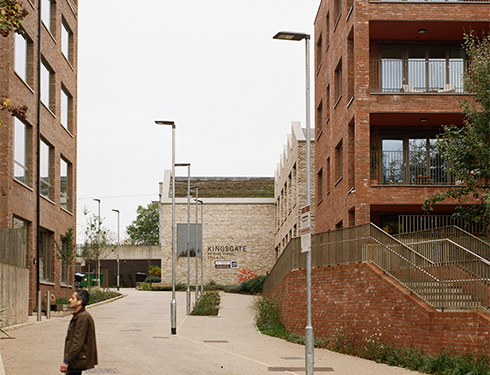
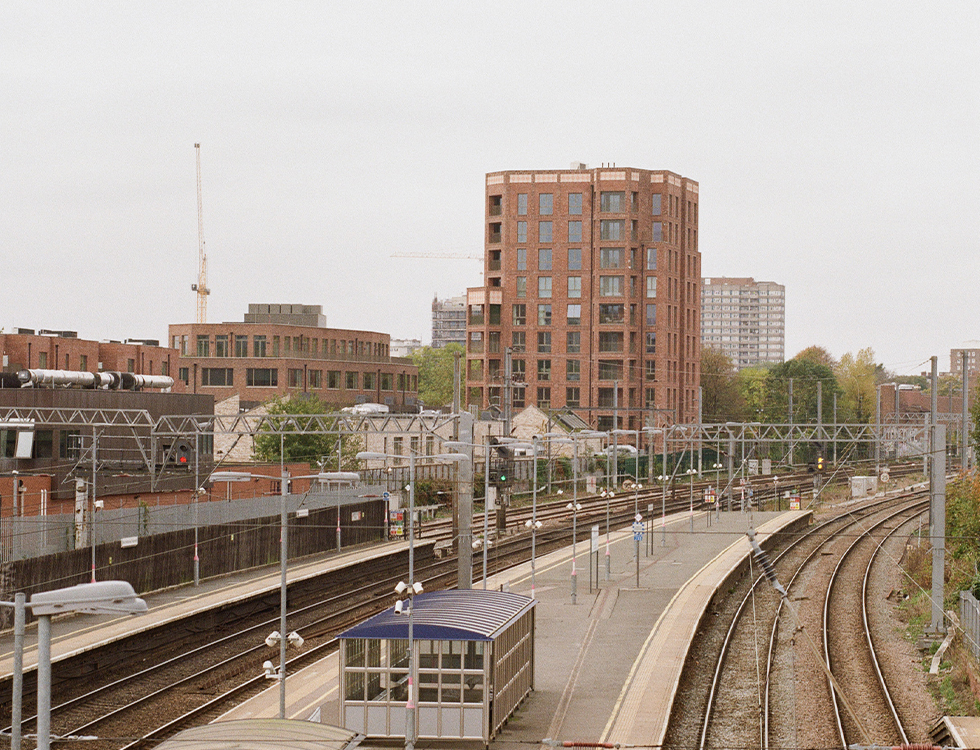
Liddell Road Phase 2 is part of the wider redevelopment of a former industrial site adjacent to the West Hampstead Thameslink line, delivered for West Hampstead Limited on behalf of the London Borough of Camden. It follows our work on Phase 1, which included the award-winning expansion of Kingsgate Primary Lower School.
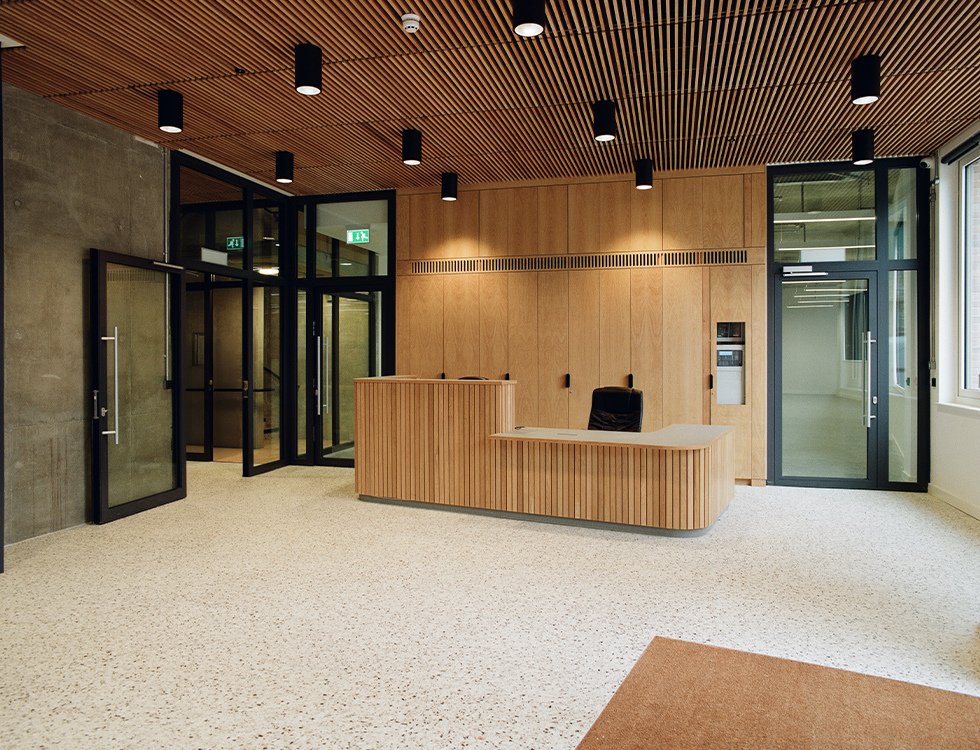
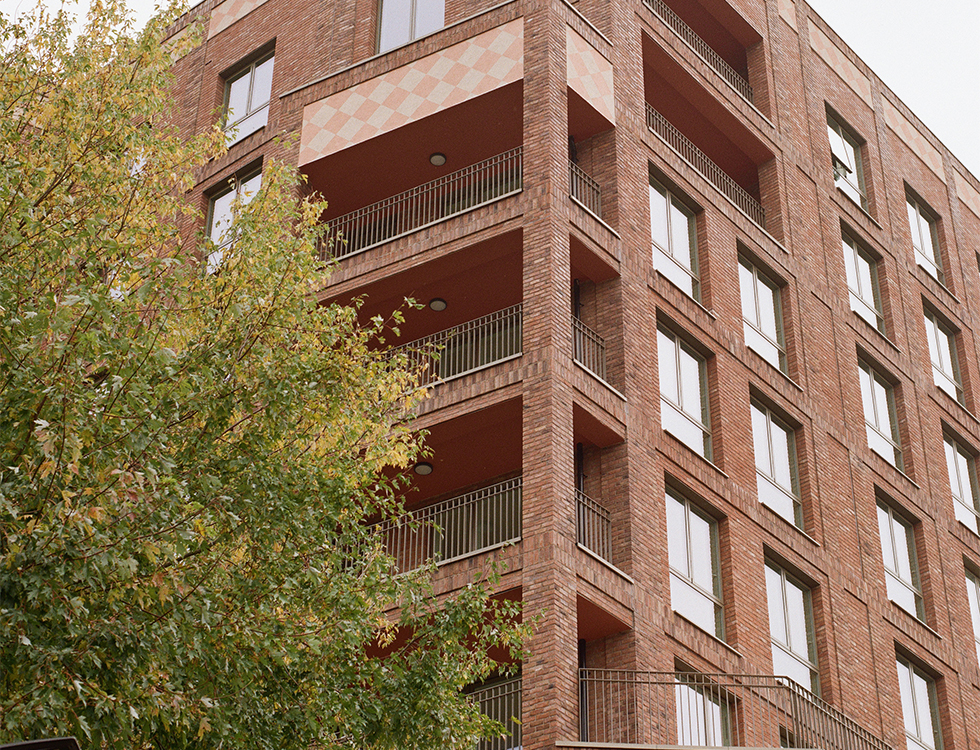
This phase delivers 136 new homes and 3,700m² of commercial space across three buildings: a new workspace (Block A) and two residential buildings (Blocks B and C), continuing the transformation of the area into a well-connected, mixed-use neighbourhood.
The site presents a number of technical constraints, including poor ground conditions, significant level changes, and close proximity to live railway infrastructure and adjacent properties. Our structural design responds to these with piled foundations and suspended slabs to manage settlement risks, alongside careful sequencing to work within tight site logistics.
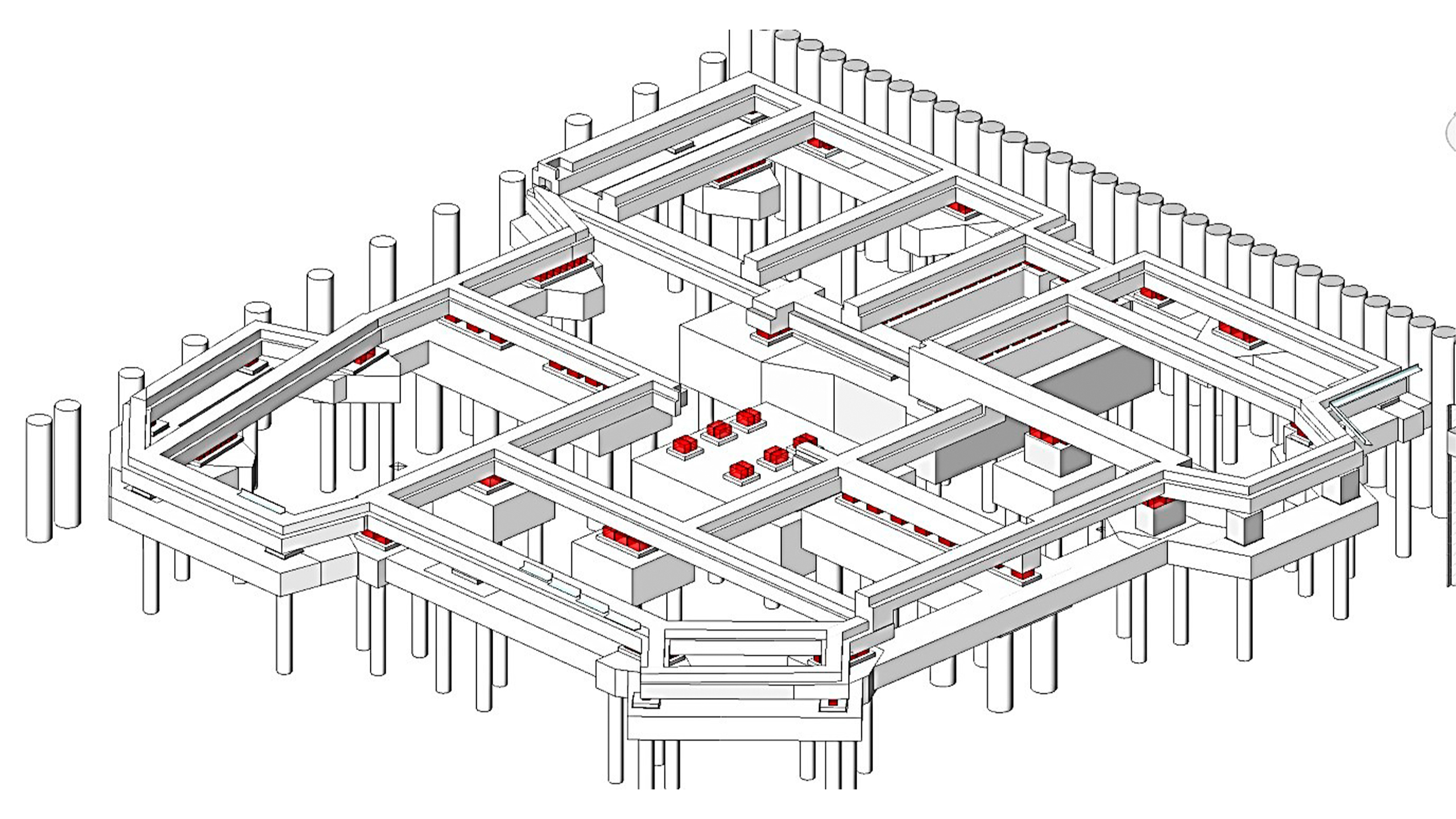
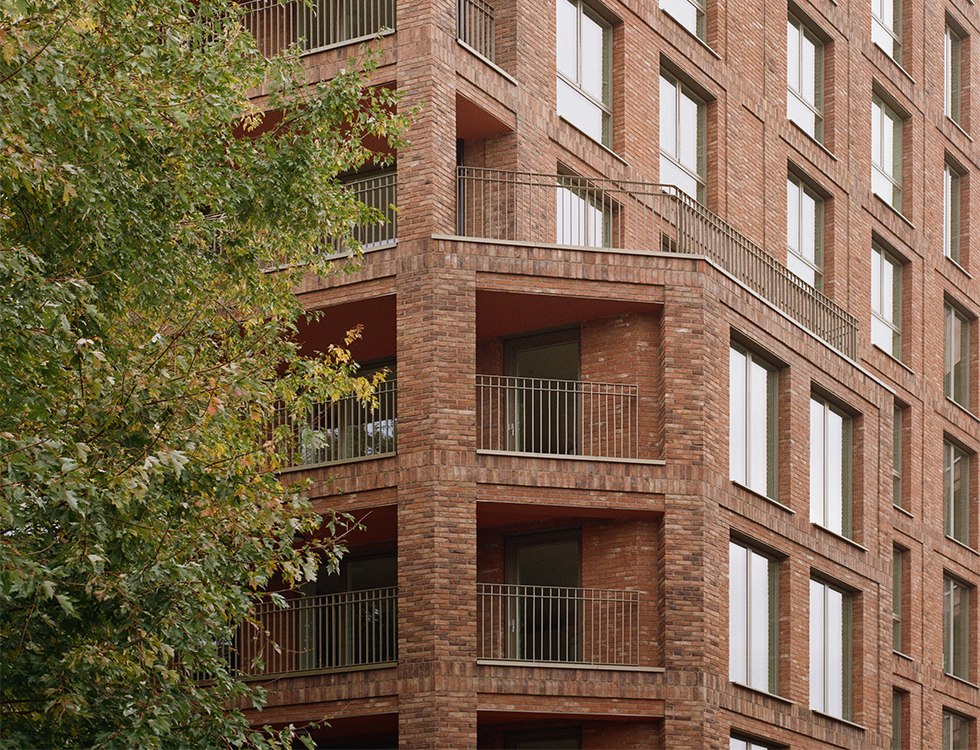
Block B is an 11-storey residential tower located alongside a live railway line. To reduce the impact of passing freight trains and improve comfort for residents, the building sits on an innovative bespoke vibration isolation foundation system. Each column and wall is supported on anti-vibration springs, which rest on pile caps below. The ground floor structure comprises a grillage of reinforced concrete beams supporting a raised precast beam and block floor above. The foundation system also incorporates a double arrangement of ground beams with clear voids to accommodate the acoustic isolation springs and maintain required separation. We developed the system in close collaboration with specialist spring manufacturer GERB, working through several iterations to accurately calculate anticipated vertical loads, spring compression rates, and strict compliance with overall settlement requirements.
The project also includes a below-ground drainage strategy developed in line with SuDS principles, incorporating attenuation and rainwater harvesting. Environmental investigations identified localised hydrocarbon contamination, which informed the remediation and construction strategy.
Structural, environmental and fire design decisions have all been made with a view to long-term performance, safety and reduced embodied carbon, in line with the project’s sustainability targets and relevant design codes.


