Arkhive is a timber pavilion developed as an exercise in assembly, disassembly and return by students on The Bartlett School of Architecture’s Design for Manufacture (DfM) programme. The project investigates how structural thinking and fabrication processes can support adaptability, reuse, and material care.
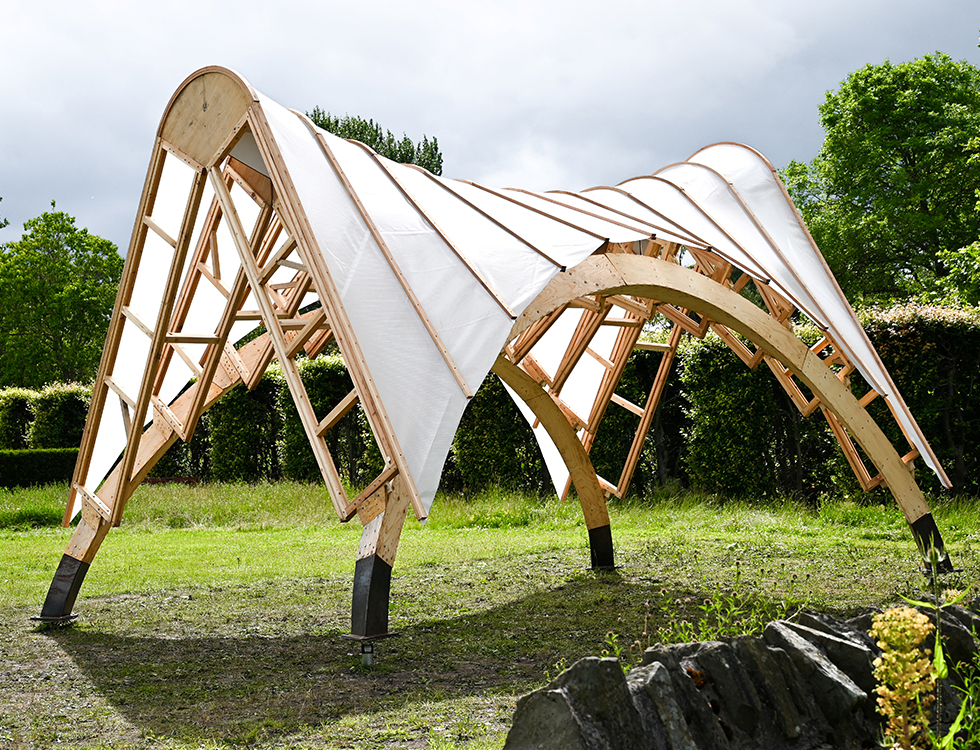
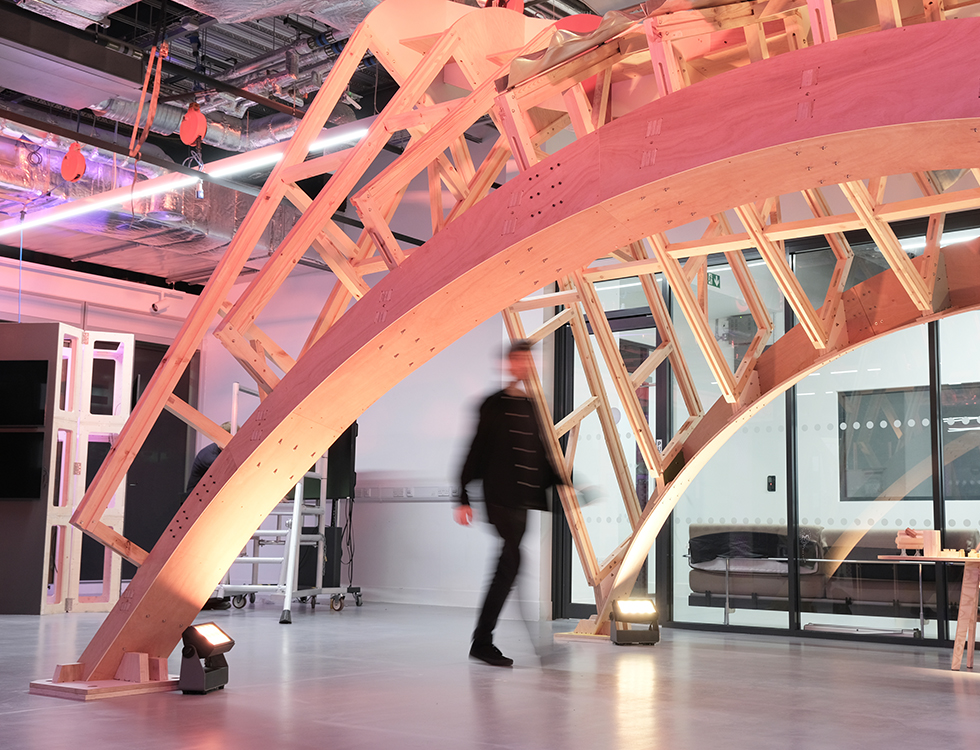
Initially constructed for The Bartlett’s Fifteen Show in London, the pavilion was subsequently refined, re-fabricated and reassembled at St Andrews Botanic Garden. This relocation was an important challenge built into the brief, to test whether the structure would retain its clarity performance when repurposed for a new setting.
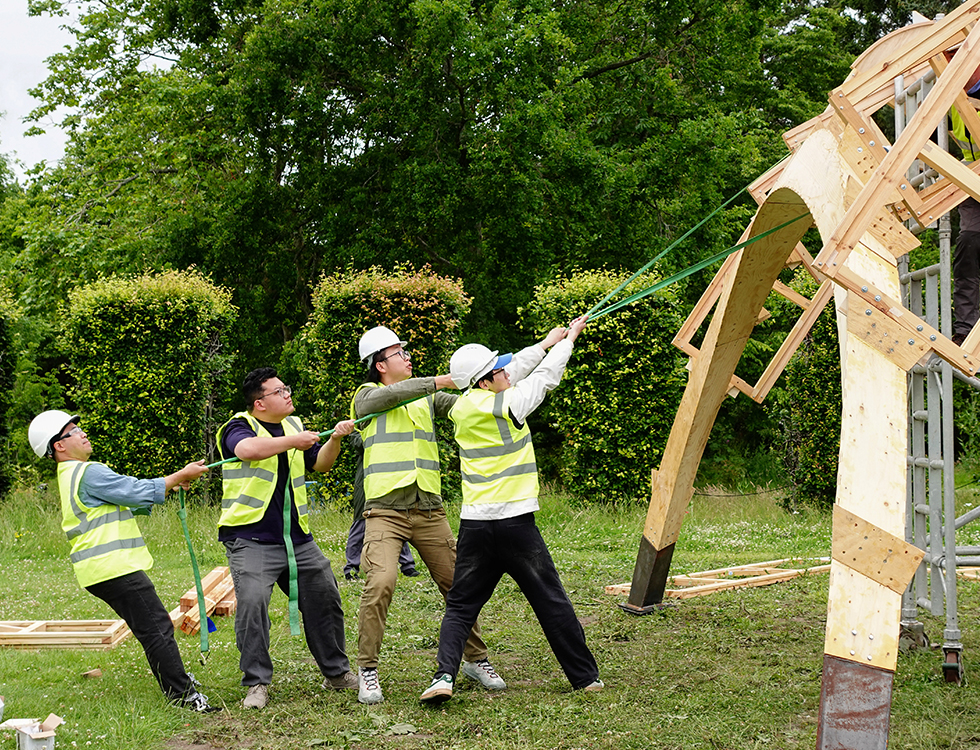
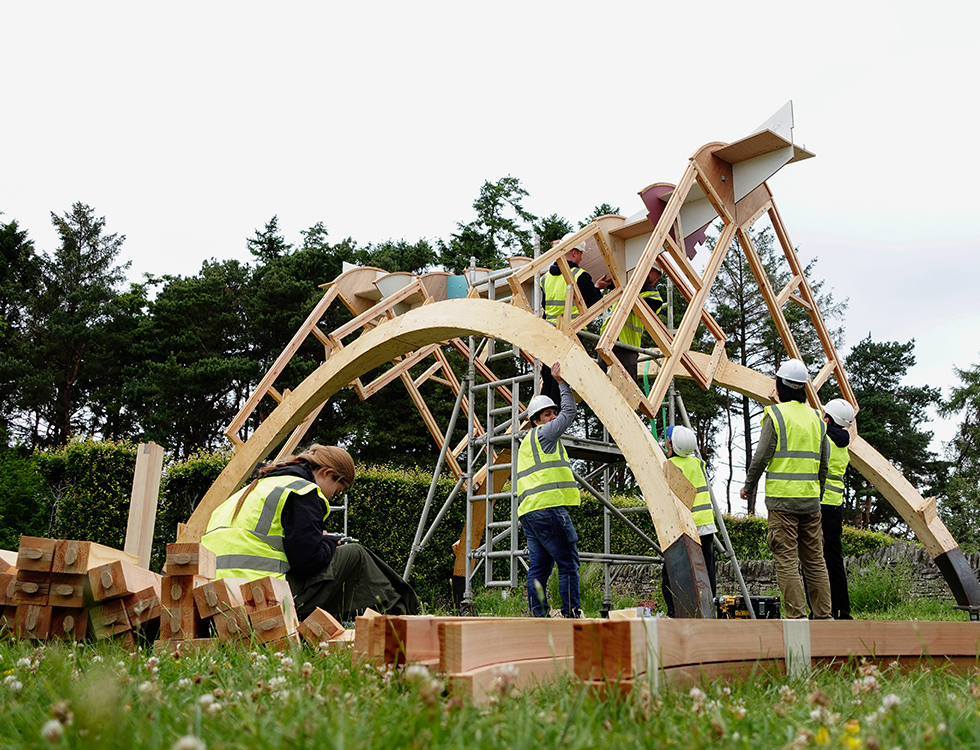
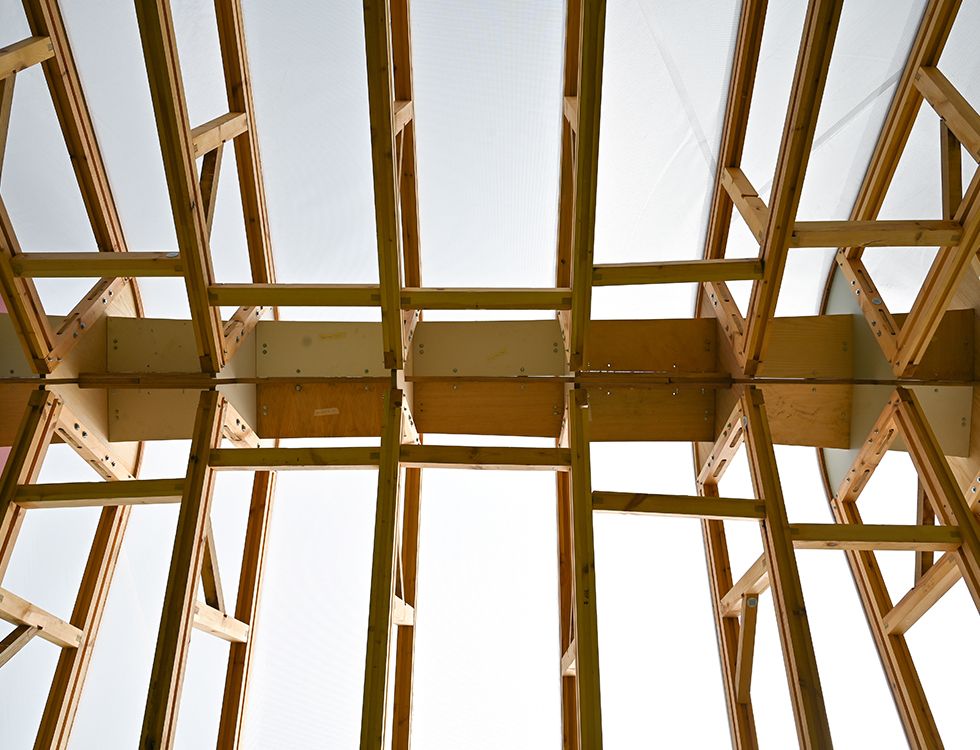
The form is defined by two twisting timber arches that lean towards one another in a carefully balanced arrangement. Stability is provided by a series of robotically assembled timber ladder-beams spanning between the arches, resolving horizontal forces and supporting the lightweight roof. The structure is pinned at its bases to fabricated steel plinths, which connect to screw pile foundations designed to minimise ground disturbance and allow future removal.
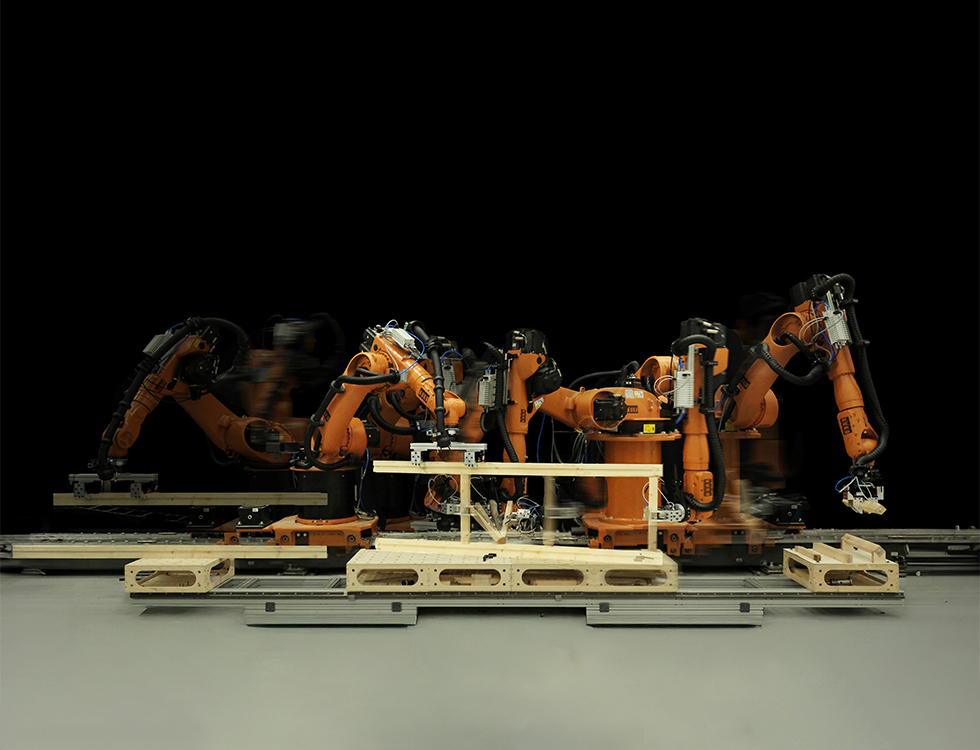
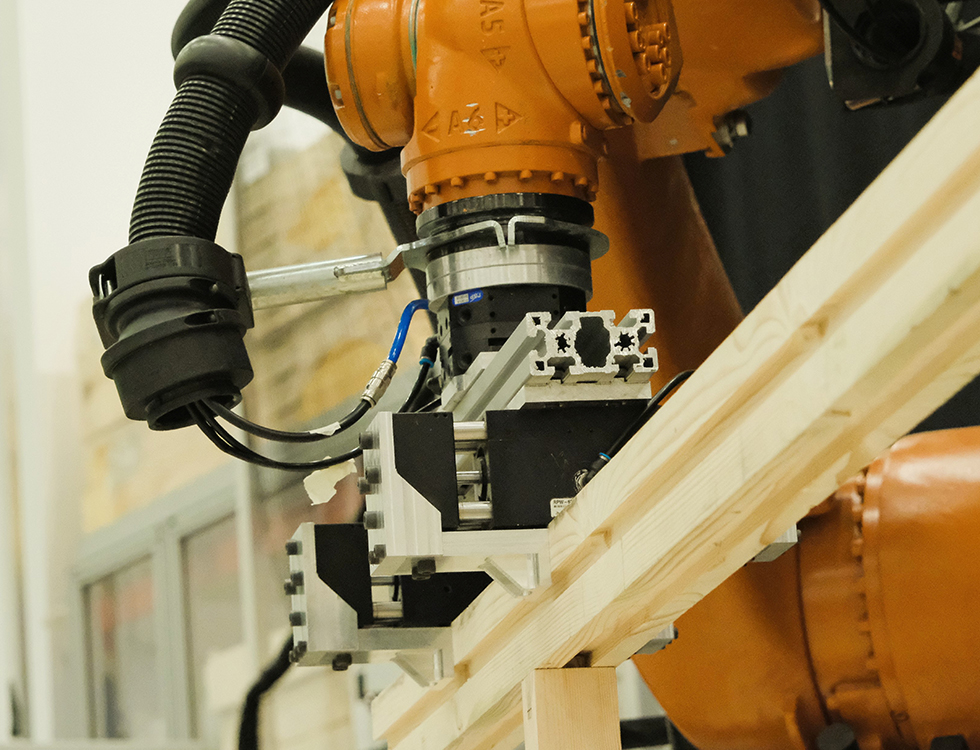
We worked with the DfM tutors and students, supporting the development of a structural approach that took account of both the material being used, and the constraints involved with robotic assembly. Natural variation in timber, alongside the need to avoid permanent fixings, led to the choice of the bespoke cam-lock joinery system. Components twist into place and lock through compression, allowing the structure to be assembled and taken apart without damage or material loss.
The structure operates as a supporting framework, so that the pavilion can be easily reconfigured and reused across different contexts. Arkhive demonstrates how carefully considered engineering can contribute to a circular approach to construction, where buildings remain active repositories of material and knowledge.