… or how to engineer an adaptable building system using the UK’s only home-grown engineered timber product.
With the climate crisis bringing into question how we build and at what scale, light timber-framed construction has been à la mode as a sustainable building solution in recent years.
However, hidden behind layers of codified information, the supply chain details often reveal a different story; most UK timber construction relies heavily on imported timber. If most of the materials we’re building with are neither home-grown nor local to site to begin with, how sustainable can these systems really be?
Challenging the industry’s outdated approaches to mass-customisation and deployability.
While mass-timber projects using cross-laminated timber (CLT) have seen a meteoric rise in use in recent years thanks to their extensive use of pre-fabrication and off-site construction – a win for carbon targets – something often overlooked is how inaccessible CLT systems can be for small clients and local authorities.
They are material-intensive, involve little hierarchy in material organisation, and require a large build-up to provide thermal, acoustic and fire and weather-resisting properties, which means that while CLT might offer a much lower-carbon option, it’s mostly reserved for larger teams and budgets.
A similarly widespread building system across many countries of the world is traditional platform frame construction. This approach differs to CLT in terms of its accessibility, material use and cost – it doesn’t require heavy timber elements like ‘post-and-beam’ does, and can be assembled with relatively little skill – but with a national decline and shortage in the relevant skills, along with a lack of genuine home-grown timber, this traditional approach is becoming less and less viable.
Traditional framing is also heavily reliant on extensive on-site labour, and rarely employs the benefits of modern computational design and the subsequent ability to create a material library. This means that some of the best tools for reducing the environmental impacts of a project – digital fabrication and off-site manufacture – are not maximised.
So what’s the alternative?
Demystifying the construction process
'What's the alternative?' is a question that sparked discussions with our long-time fabrication partners BlokBuild years ago, and ideas for a new engineering system.
We saw a clear need for a system that would demystify the construction process, be easy to assemble, and use home-grown engineered panels comprised of timber waste. Fast forward 20 years, and our Oriented Strand Board (OSB) system is offering precisely this for projects and design teams around the UK, in the form of a novel computational, material, and structural strategy.
Our system approach is radically shortening the supply-chain of structural building systems, employs direct-to-manufacturing digital design and fabrication techniques, makes use of timber waste products, and is both accessible and affordable.
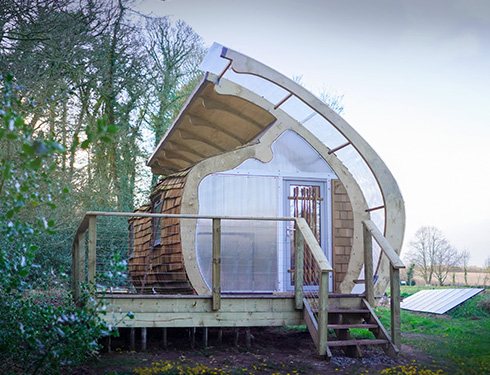
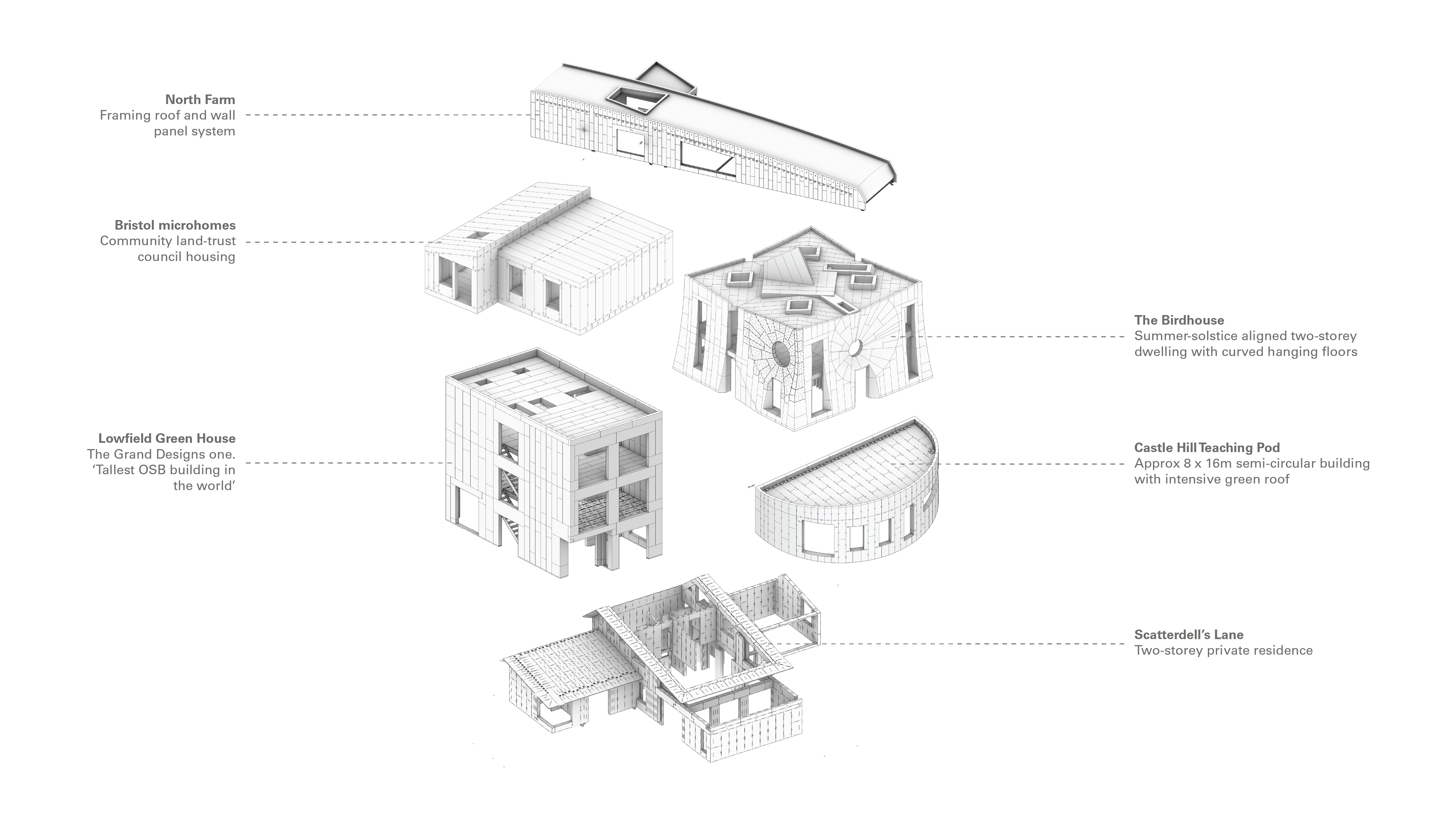
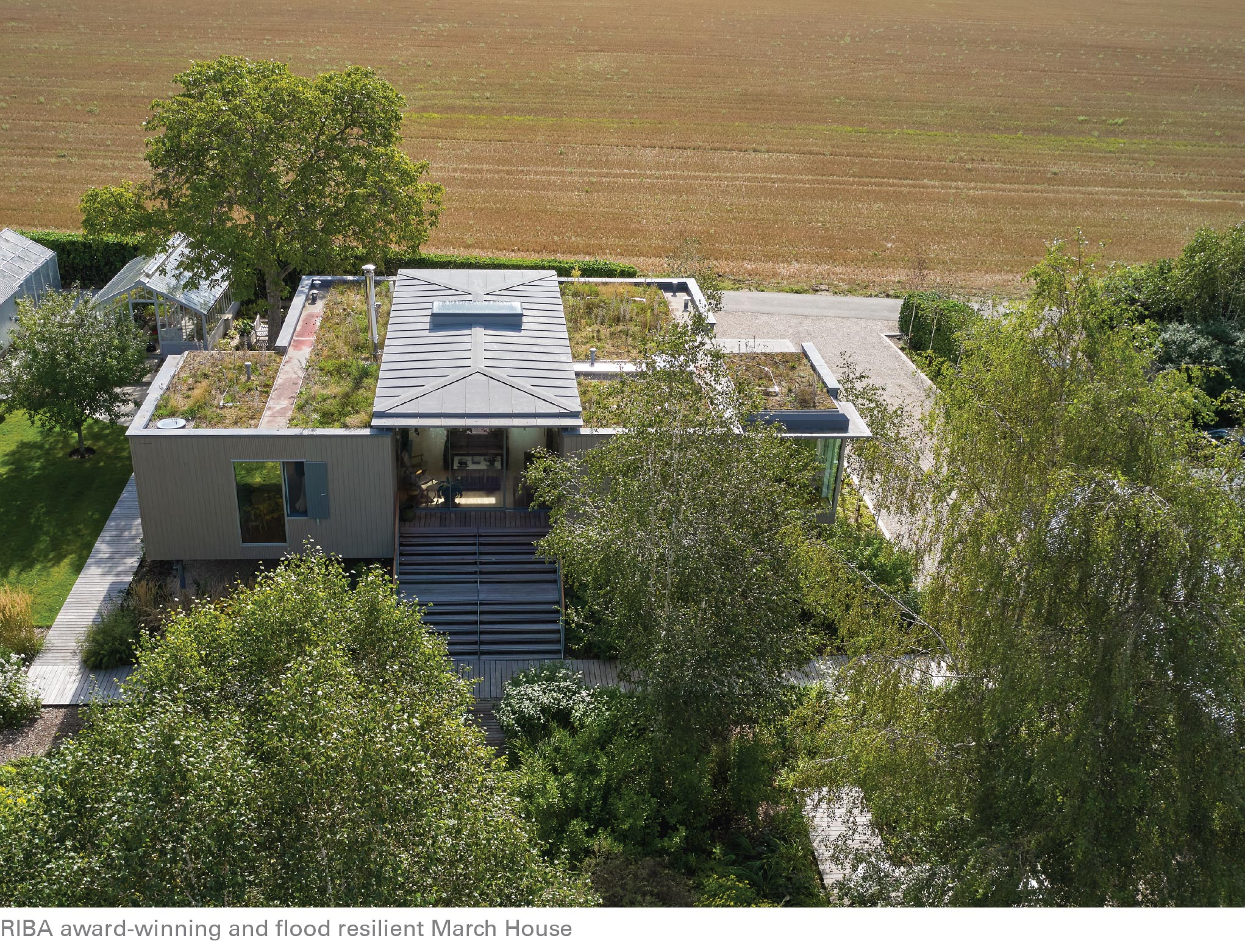
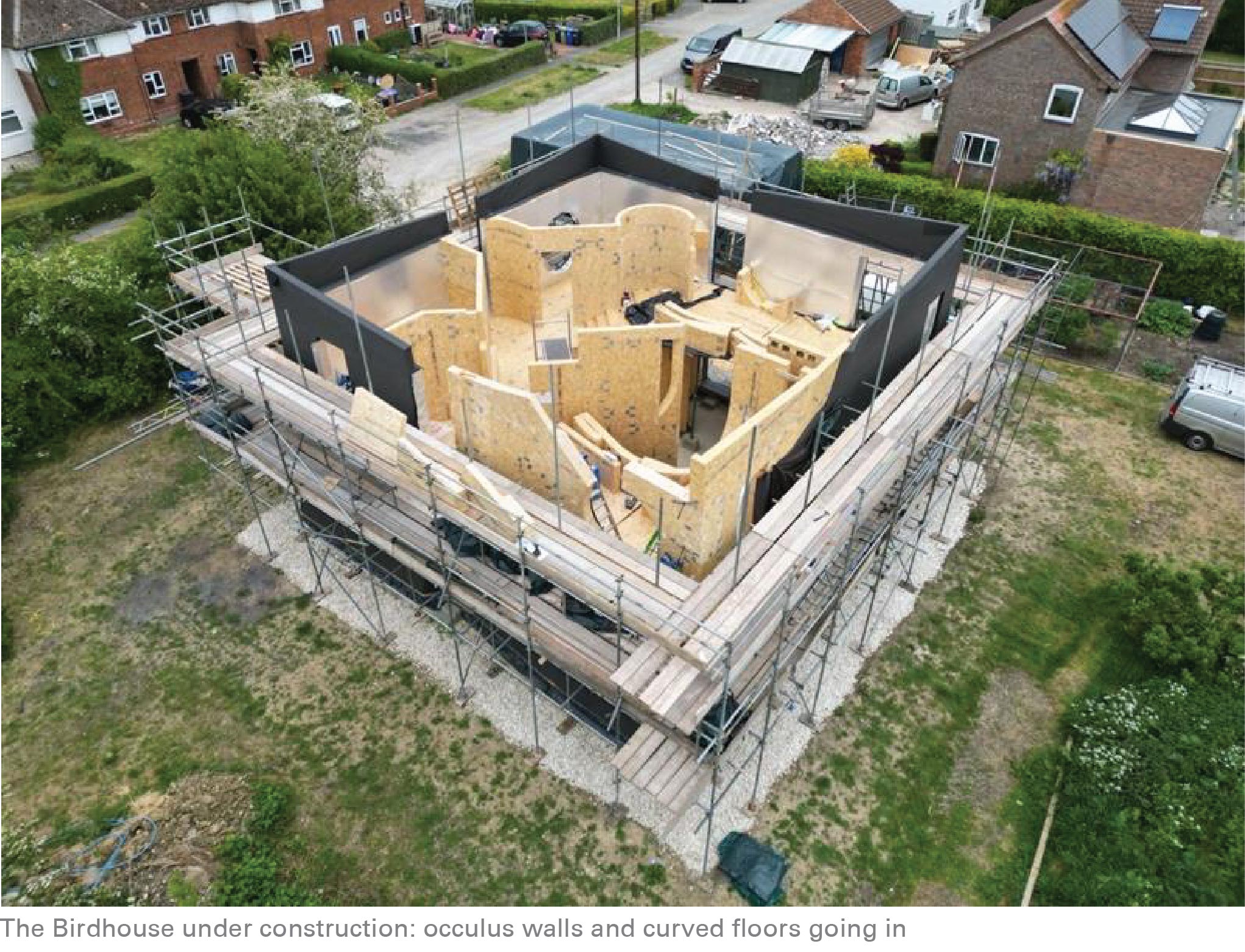
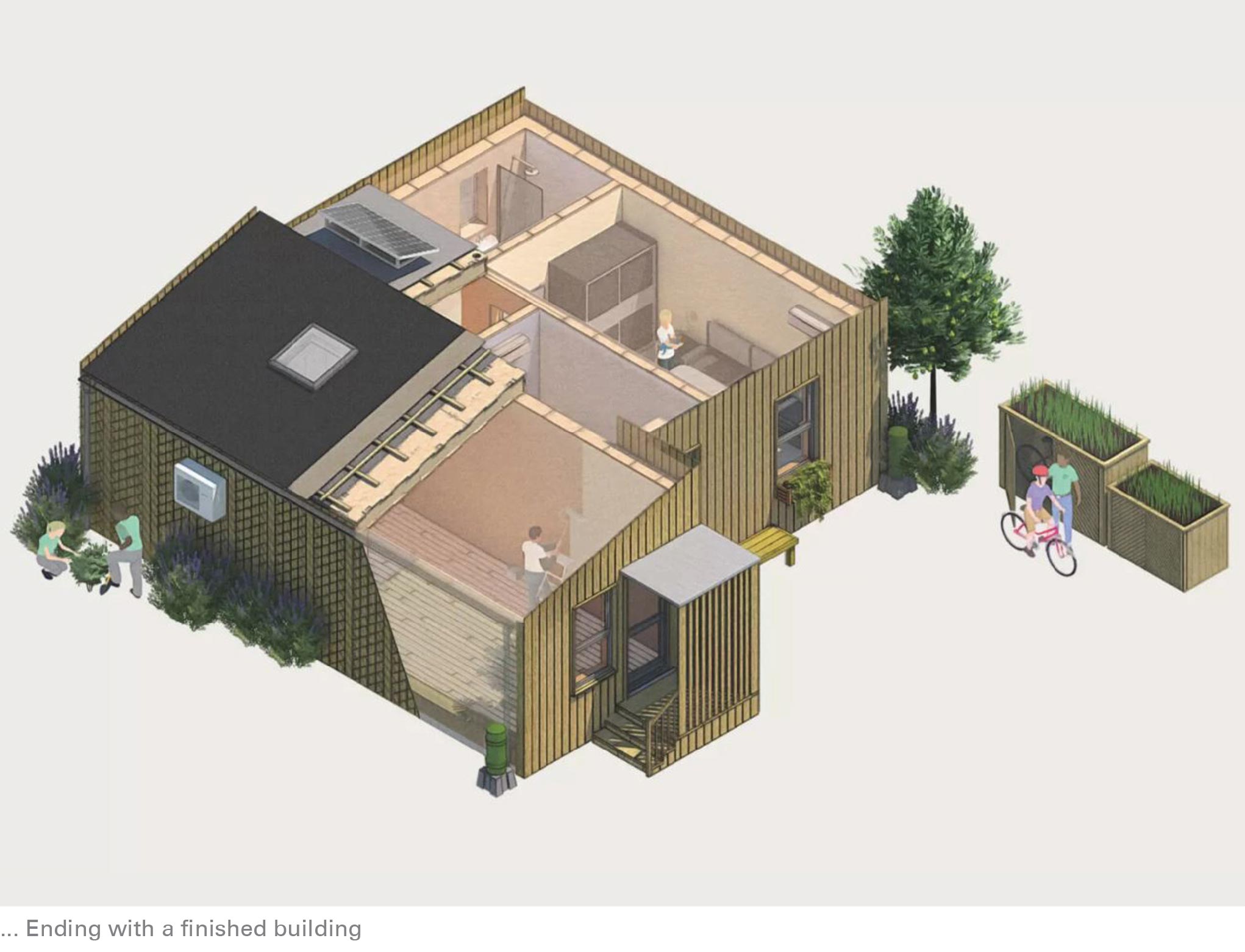
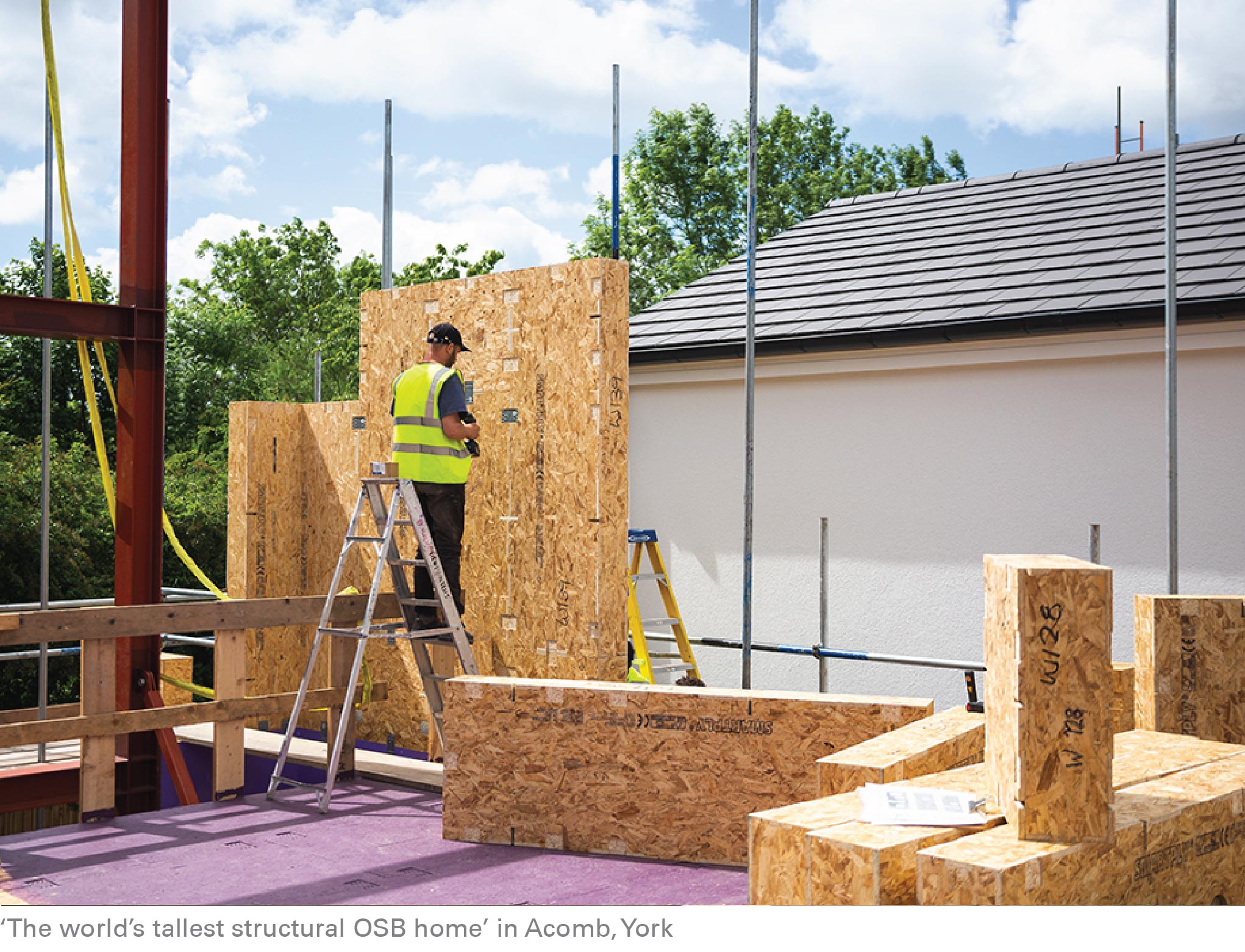
Since its launch in the early 2010s, numerous small clients and self-builders have already made use of its bespoke architectural design solutions, creating an impressive roster of projects that includes: the 2023 RIBA South Award and 2022 Manser Medal Winner, March House (above right), as well as flood-resilient and community housing, spaces for schools and education, and what we believe is the world’s tallest OSB structure – featured in Grand Designs in 2024.

How does it work?
The cassettes’ material strategy pivots around the use of Oriented Strand Board (OSB): a cheap form of particleboard made of waste wood strands, which are compressed and bonded together using non-toxic adhesive resins.
The lay-builders gut instinct is to see this material commonly used for basic flooring, flat roof decking and wall sheathing which means OSB is usually associated with low-precision engineering, but our works shows a different precedent. This humble material has impressive potential, and can be locally manufactured from abundant reclaimed and difficult-to-use wood resources to become both an articulate structure and building envelope.
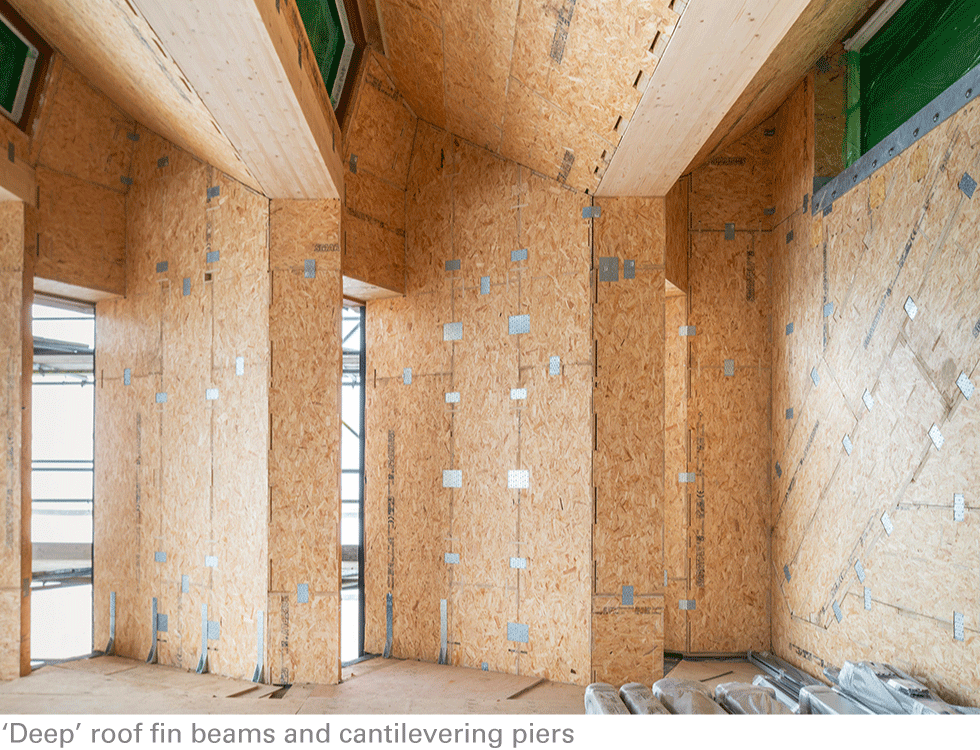
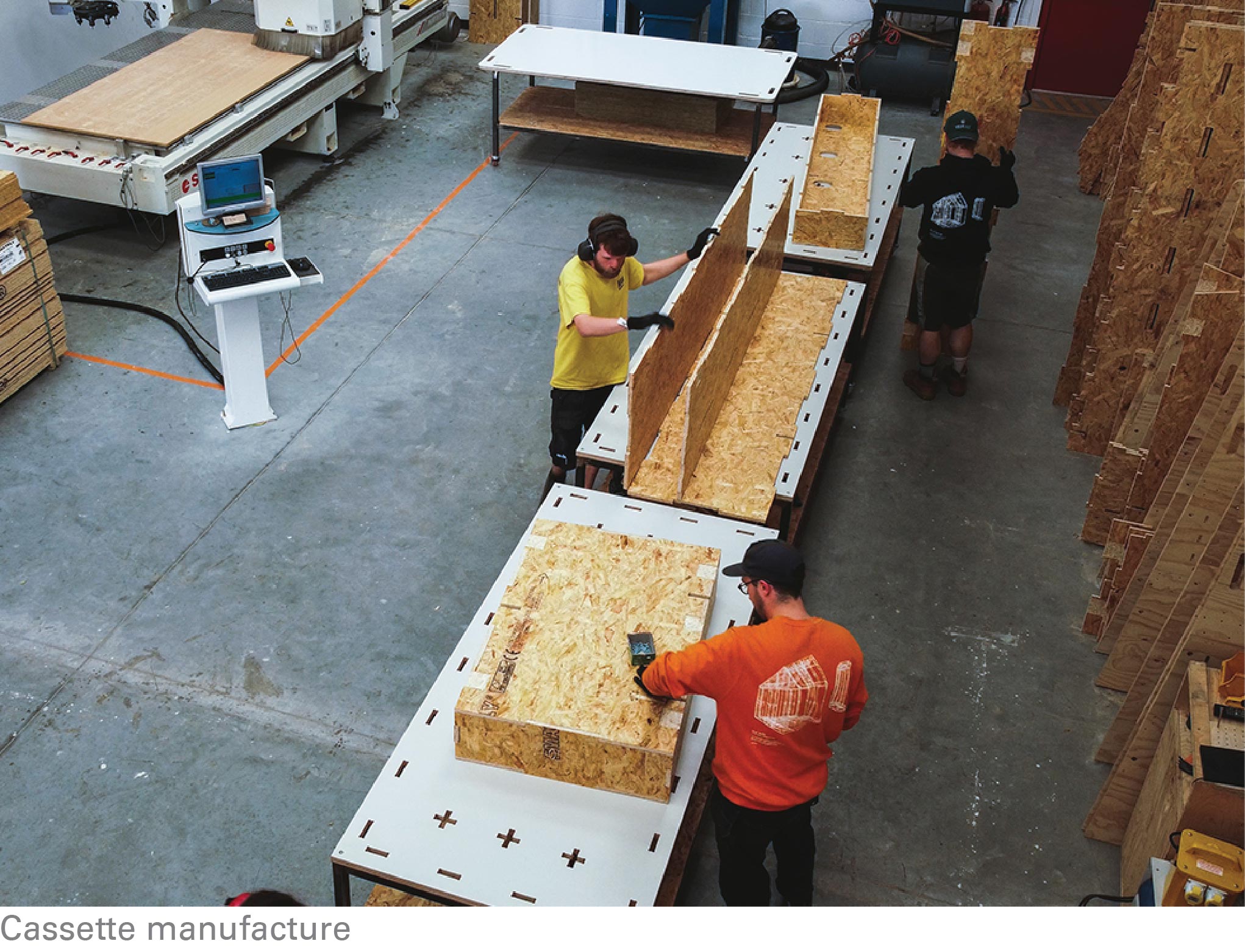
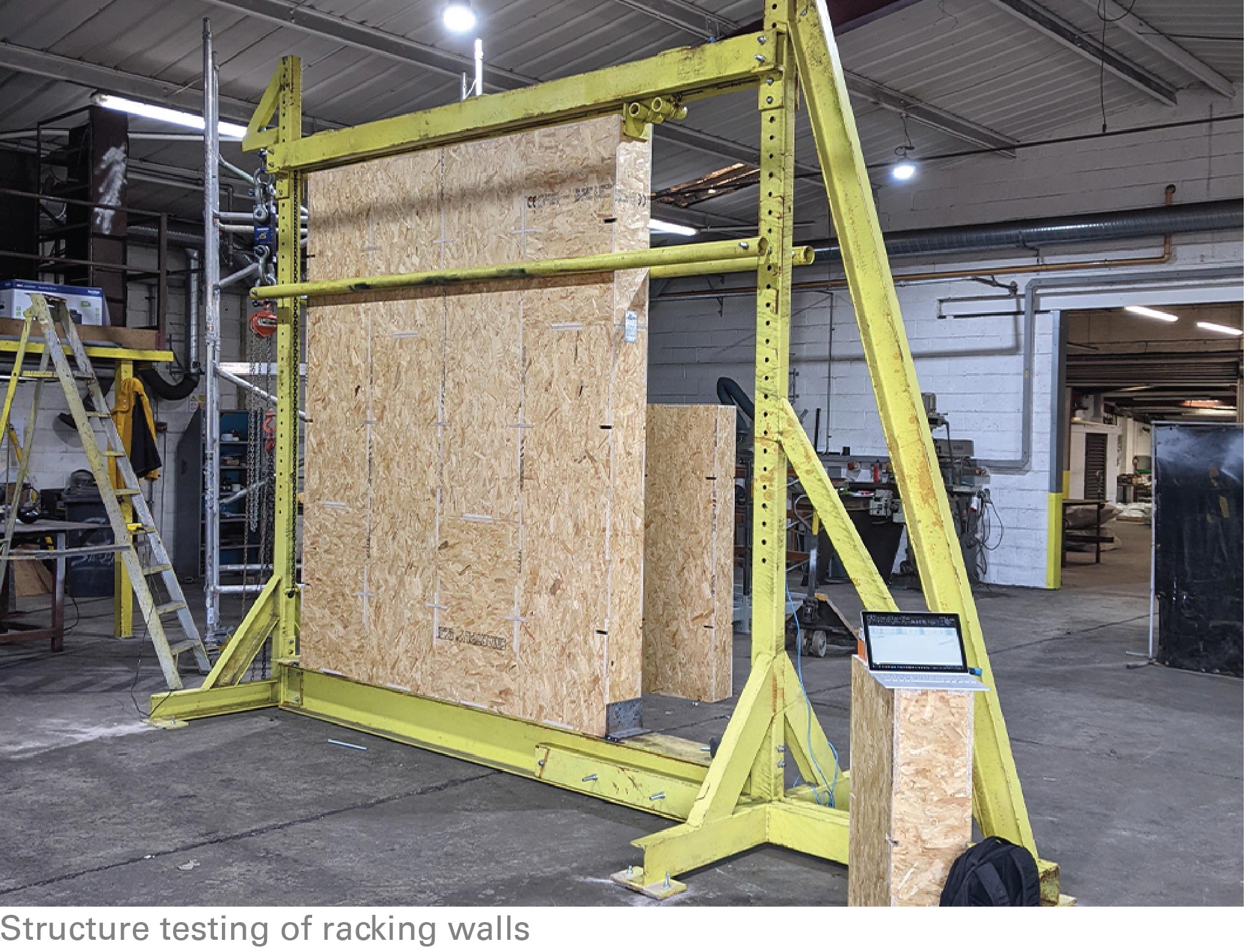
Our system approach with BlokBuild sees OSB manufactured into a series of structurally tuned, torsionally stiff, and insulated cassettes which are CNC cut from engineered OSB-sheets.
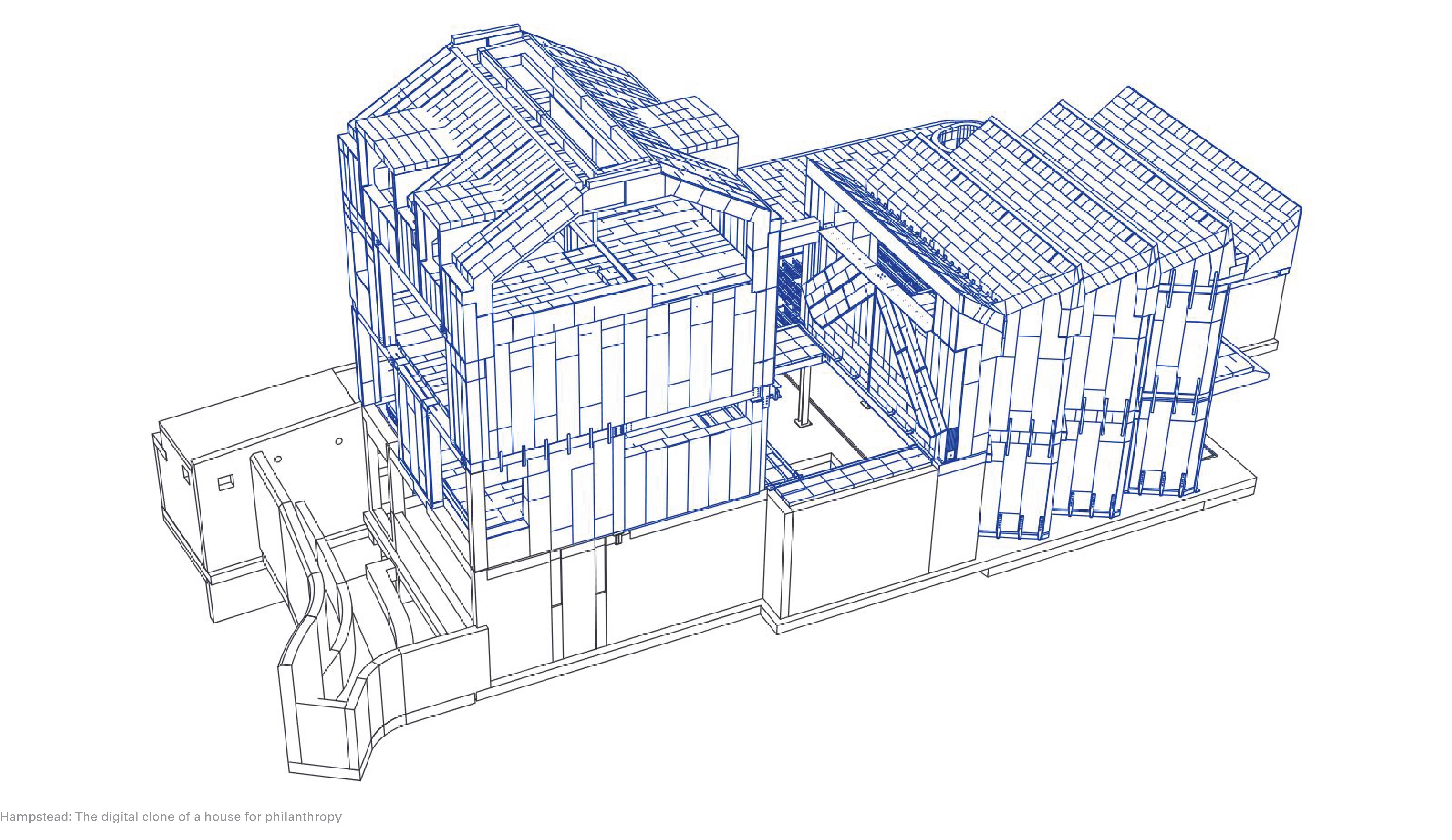
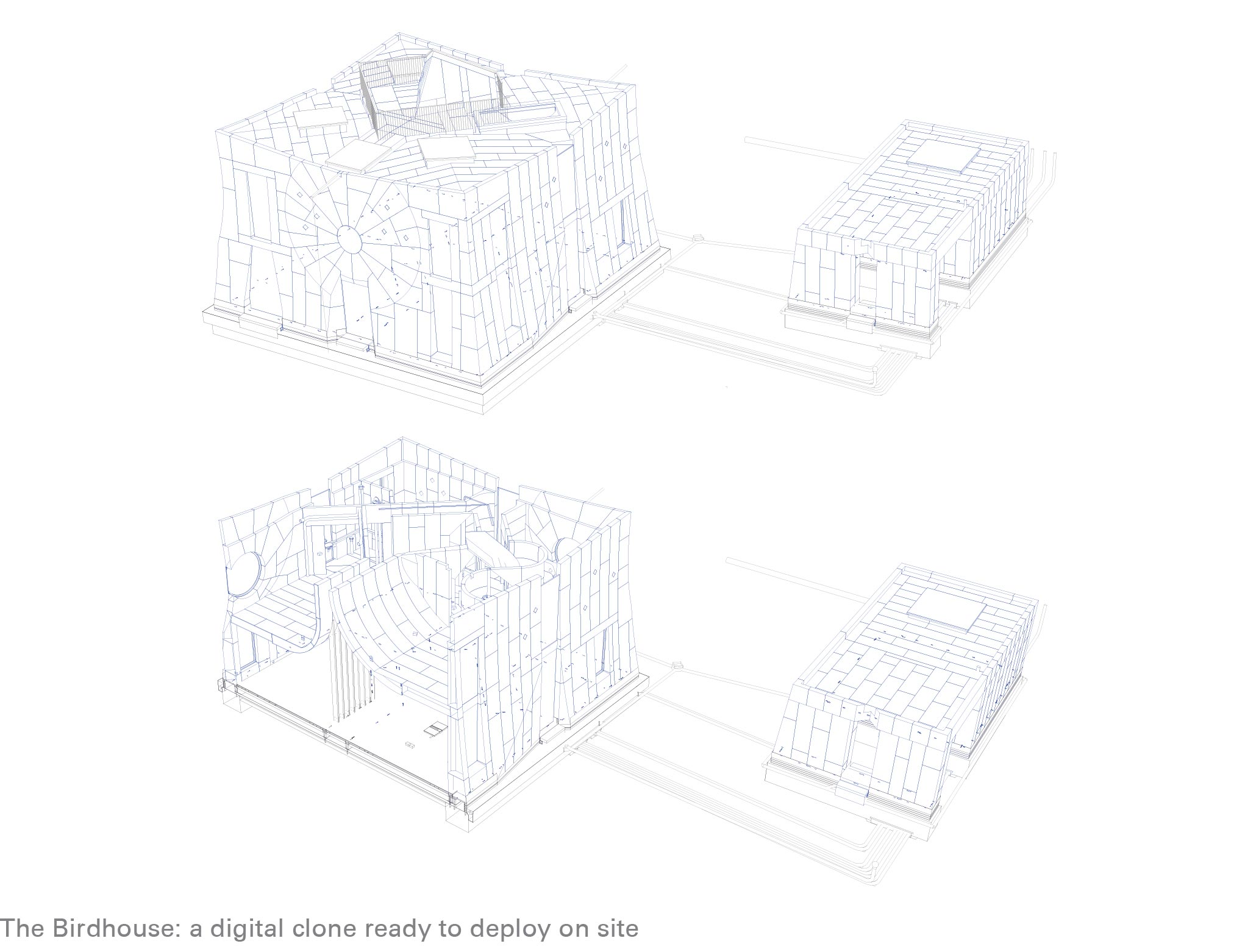
Building on our team’s deep bank of fabrication knowledge developed over several decades, these cassettes are part of an off-site workflow that harnesses the ‘digital clone’.
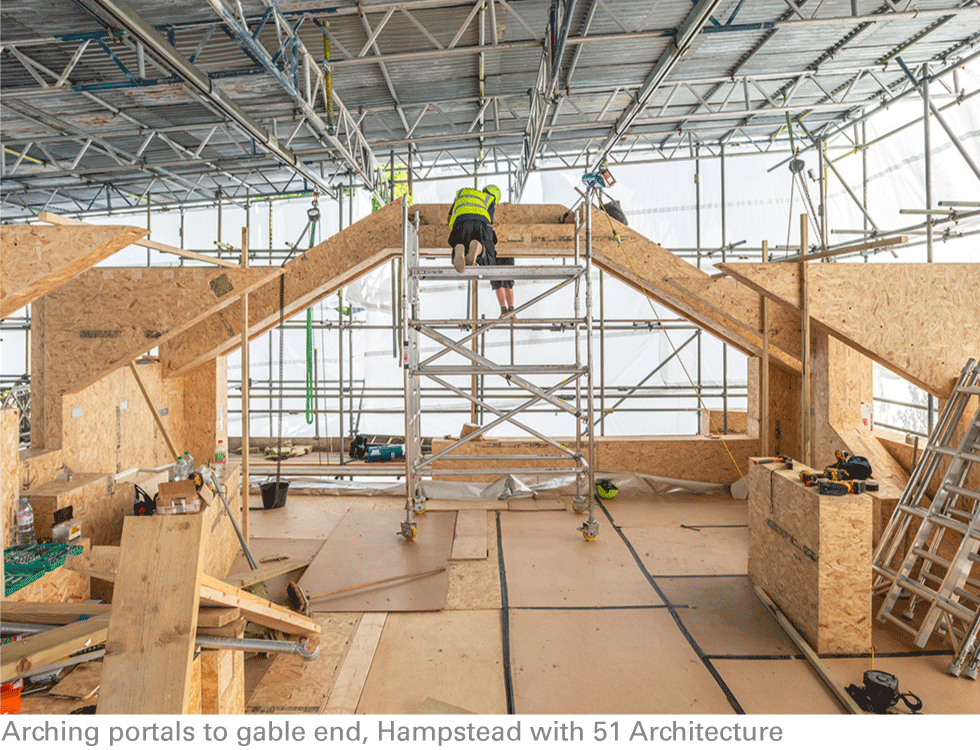
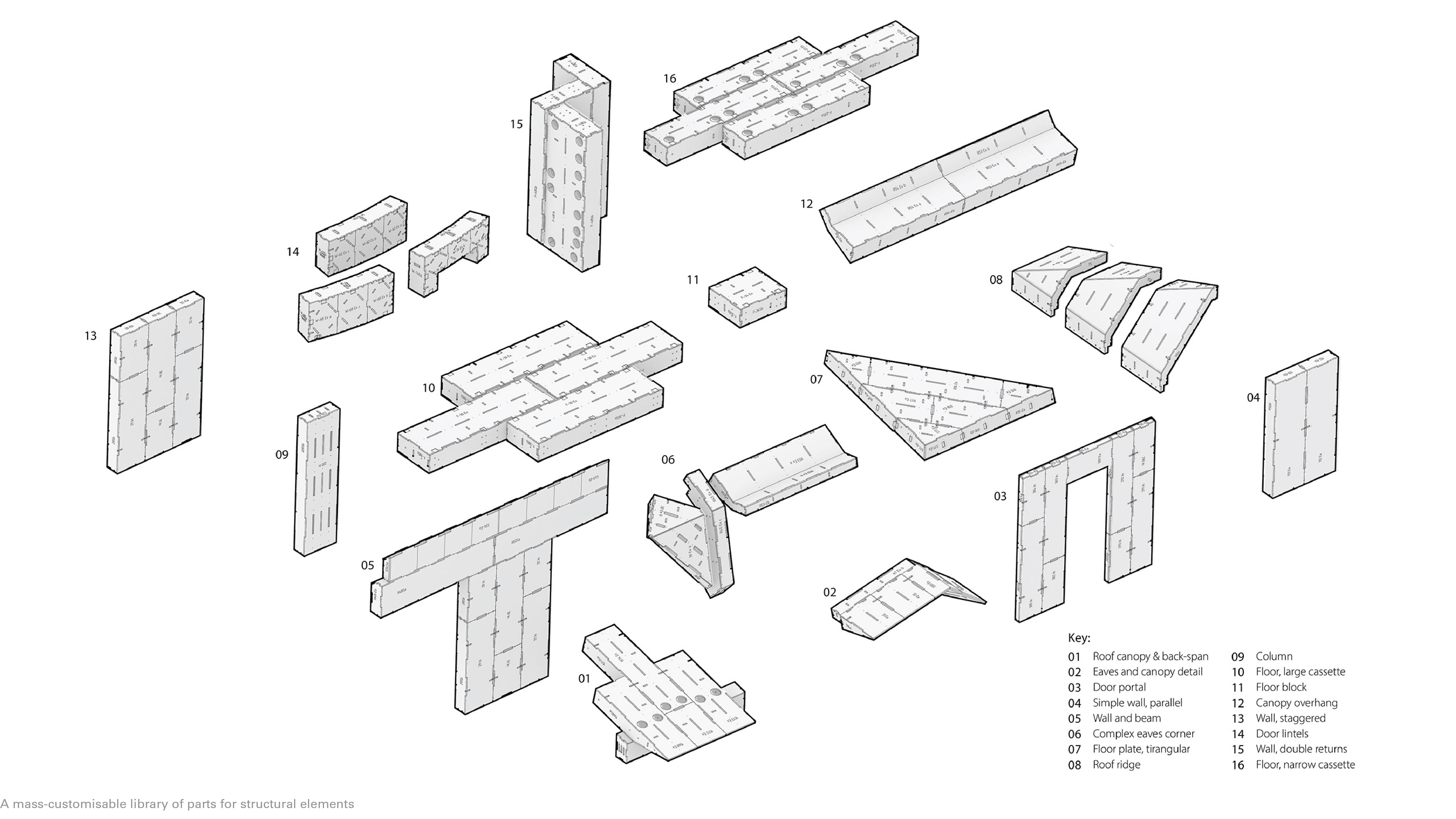
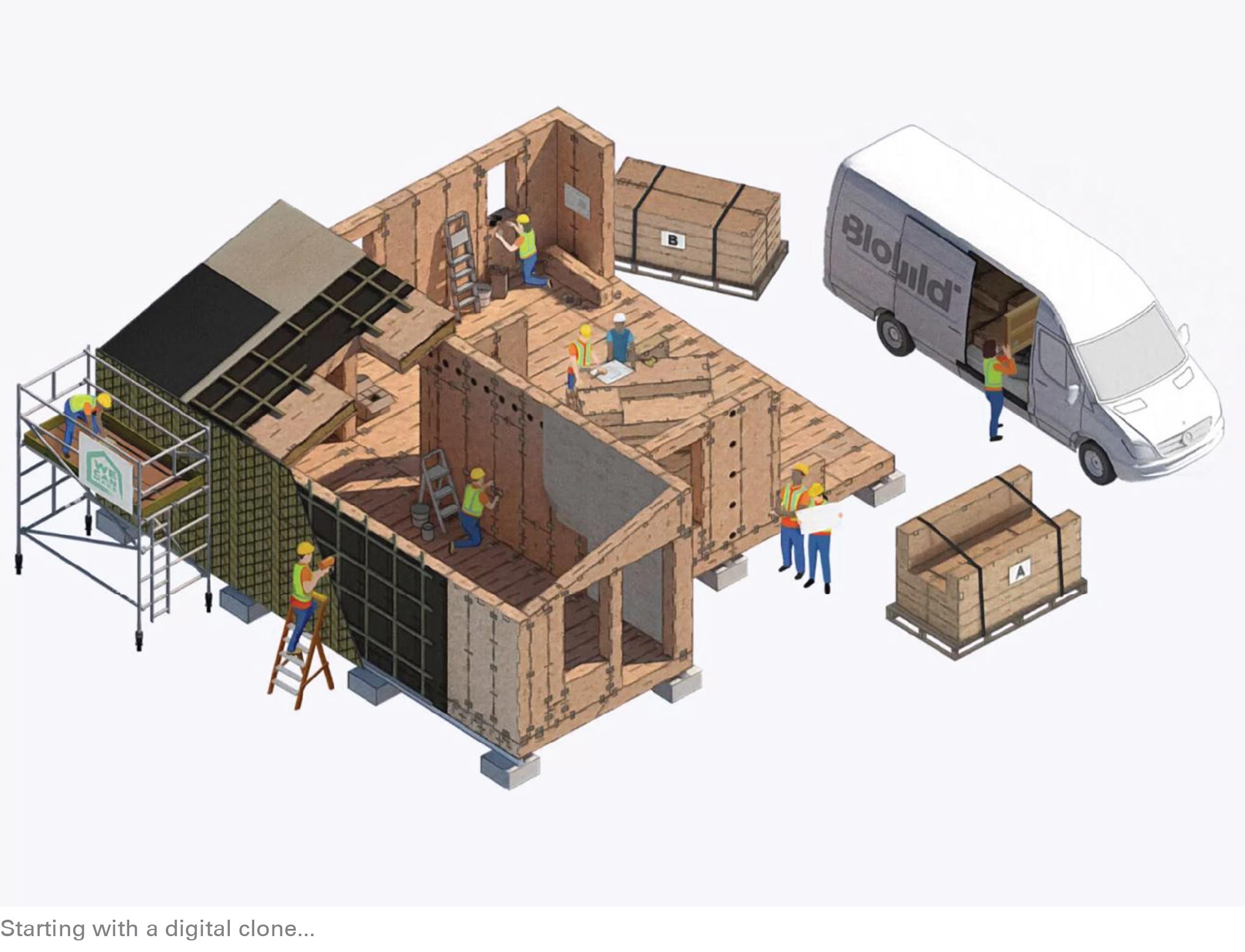
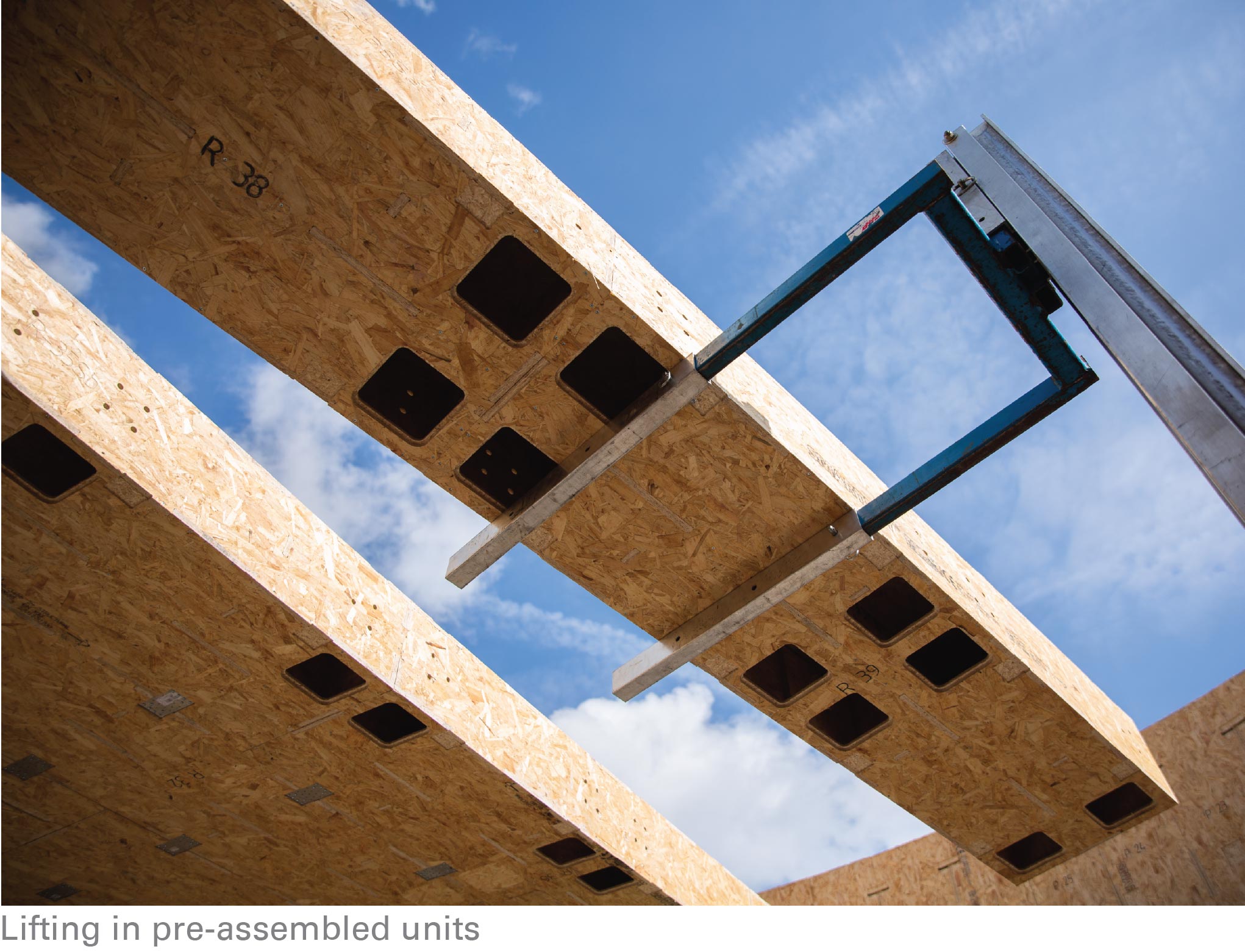
This means we’re able to tap into some of the core concepts of modularity and mass-customisation by providing fundamental building “blocks”; a kit of discrete, easy to handle, parts that are aggregated together via simple bolted or slotted connections to form structural and architectural elements.
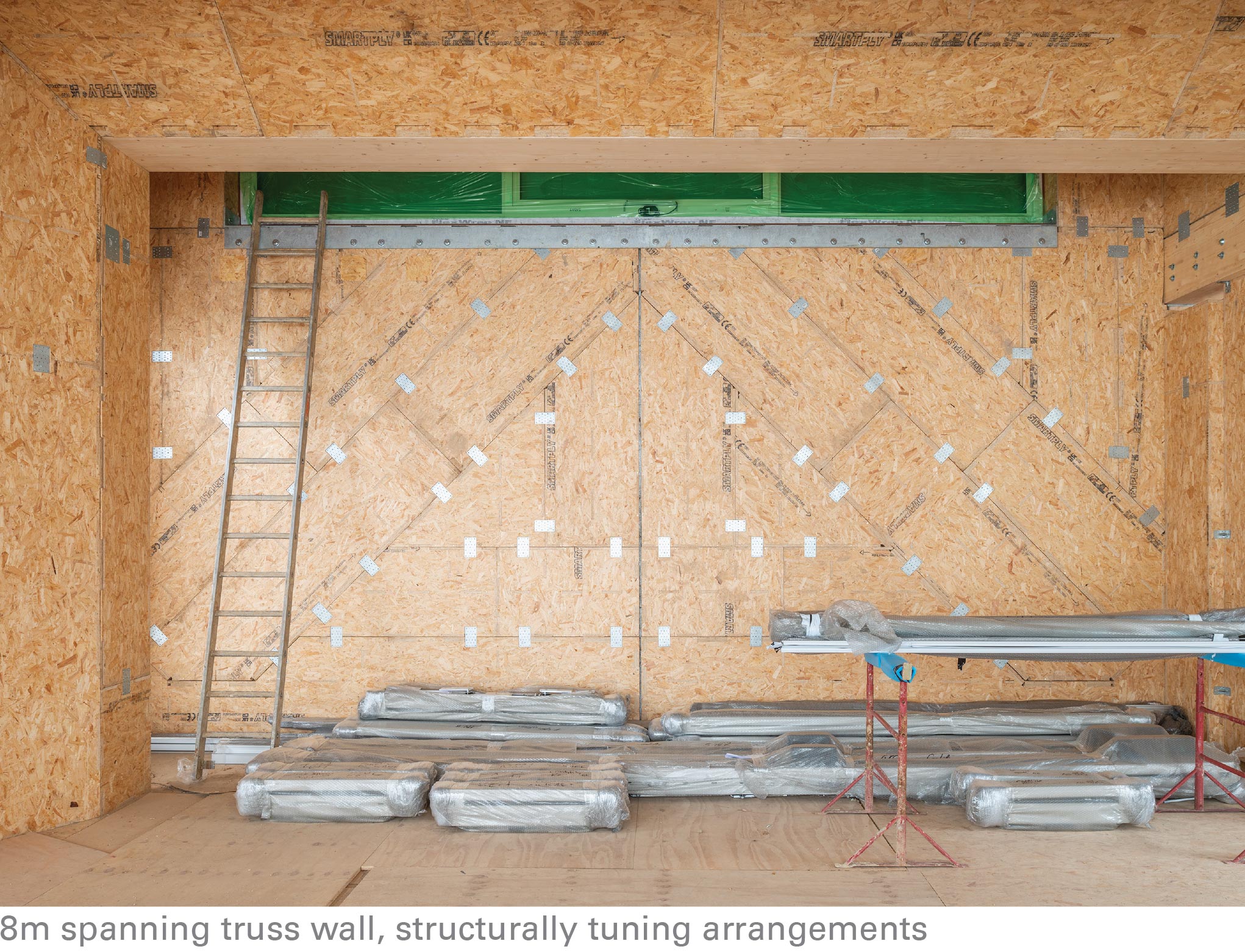
These basic building block elements can be digitally optimised and adjusted to work as either load-bearing elements (i.e. walls) or spanning elements (from 7m spanning floor slabs, to 8m transfer structures acting as Truss-walls). This is achieved by modulating the arrangement of the internal and external skins of each cassette within the global whole.
Accessible, regenerative building
From design to construction, the goal of our system approach is to create a building solution that is regenerative, socially cohesive, accessible, and structurally efficient.
By utilising a digital design workflow that integrates architecture, structure and fabrication with a high degree of automation, we’re able to ensure that the production chain for all elements in our library of parts remains short, ultra-efficient, and integrated. And once on site, the lightweight and easy-to-handle elements allow for assembly with very little skill, on projects of all scales and typologies.
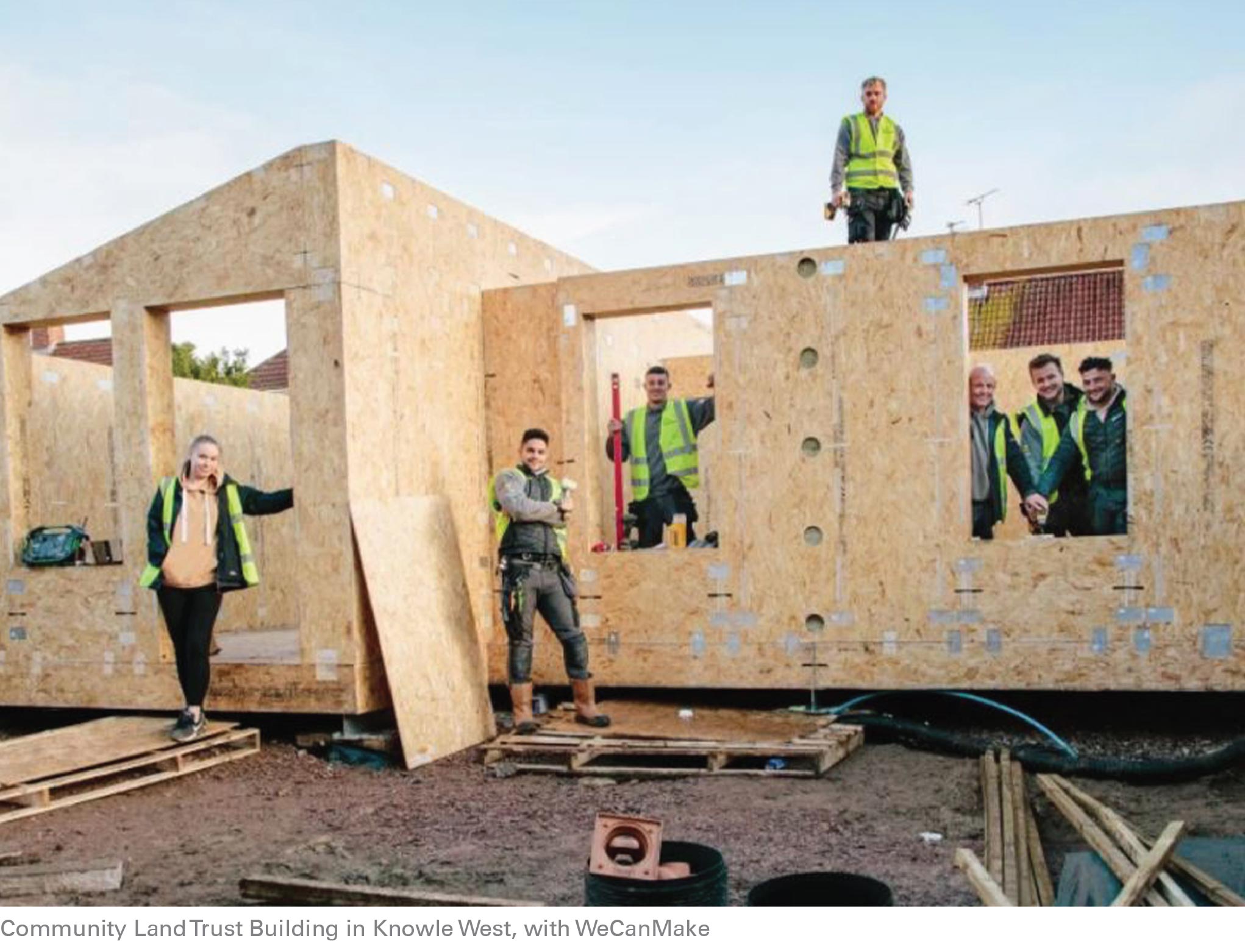
It is thanks to the efficiency and accessibility of this system that we’ve been able to democratise construction and incentivise self-builds for projects across the UK – whether working with Community Land-trusts like We Can Make to unlock microsites for dignified community housing (pictured above), with Giroscope Hull to upgrade delipidated housing stock, or with self-builders and private clients to build mass-customisable structures that quite simply ‘clip together’ – and we have already seen how this promotes a more participatory approach to building.
We hope to continue to see the ripple effect of the system’s success so far in more community engagement, more empowerment and ownership, skill development, affordability, and ultimately, a stronger connection to the built environment.